Is “Life After Death” a Reality?
Introduction
Are we humans born with ‘souls’ — some sort of enigmatic spirits — separate from our physical bodies?
We are certain of the existence of our amazing brain, as well as the consciousness that arises from the function of our brain. What we’re not sure of, however, is the existence of a separate “soul.”
Is there any proof available that humans have souls? All books (including Holy Books) were written by people still alive, so obviously we can’t use the written word as proof. But what about people who nearly died — people with compelling NDE (Near Death Experience) testimonies?
Perhaps we are actually everlasting souls temporarily occupying our physical bodies. But the case is (so far) unproved and we’re going to have to live with that uncertainty. What we can do is examine the brain and consciousness, for which there are lots of medical (which includes psychological) information. In the process we might be able to make some inferences about the likelihood or not for the existence of souls.
To be sure, there is no shortage of factual scientific information available on neuroscience and psychology. There is also lots of information available on consciousness and “souls,” most of this information falling under the metaphysical category.
…These are subjects on which countless books have been written with new books coming out every day. So it’s unrealistic to expect one article to fully cover any one of these areas, to say nothing of all of them. Nevertheless, for the purpose of this article, I think it unnecessary to read entire books on these subjects to get a feel for what may be closer to truth.
We need to keep an open mind, although not too open: We can’t throw out years of neuroscience and psychology because of their tendency to refute metaphysical topics. On the other hand, we can’t dismiss outright every metaphysical idea just because they can’t be readily proven. There is much we don’t know about our Universe and it’s a sure bet we’ll never know it all — not even close.
At minimum, we should continue to acknowledge the limits of our knowledge and strive to recognize the points where facts become speculation, where legitimate theory becomes guesswork, and where certainty becomes delusional wishful-thinking.
The General Consensus On the Brain, Consciousness, and Souls
Most people — religious or otherwise — agree that without the brain, consciousness is not possible. This is an undisputed fact of medical science.
Yet when speaking about souls, the religiously affiliated tend to demote the brain to a status equaling a pancreas or foot; it becomes just another body part with no relation to a soul. After all, one could not justify any connection between the brain and a soul knowing the brain will die someday (or deteriorate into dementia or develop Alzheimer’s disease along the way, as examples).
Some people — the non-religious among them — agree consciousness arises from brain function but becomes a separate entity that somehow survives the death of the brain. At precisely what point consciousness diverges as an everlasting “emergent property” of the brain is not clear; the idea is that it just happens.
Fear of Death:
A motivating factor behind soul belief
It is clear nearly all of us — religious or not — have a powerful urge to believe we can survive the deaths of our bodies.
It appears our fear of death comes from two areas:
1. Our natural fear of the unknown

Our natural fear of the unknown is made all the worse by movies, books, and tales handed down by people who obviously aren’t speaking from experience.
“Men fear Death, as children fear to go in the dark; and as that natural fear in children is increased with tales, so is the other.” – Francis Bacon
”It is the unknown we fear when we look upon death and darkness, nothing more.” – J.K. Rowling, Harry Potter and the Half-Blood Prince
Famous NFL running back Walter Peyton died at 45 of cancer. In a NPR interview, his friend Eric Dickerson related a visit he made to Walter’s bedside shortly before his death. Dickerson asked Walter Peyton, “Are you afraid of dying?” Peyton responded, “Of course I’m afraid of dying. I’ve never died before!”
“I do not believe that any man fears to be dead, but only the stroke of death.” – Thomas Browne
2. Our fear of losing forever our ‘selves’
“We fear death so profoundly, not because it means the end of our body, but because it means the end of our consciousness – better to be a spirit in Heaven than a zombie on Earth.” – Alison Gopnik

Although “the stroke of death” mentioned in Thomas Browne’s quote is surely feared (at times) by most of us, it’s losing the essence that is our selves — our identities — that we fear most.
As a result, it doesn’t take a degree in psychology to realize we are easy prey for anything or anyone promising everlasting life. We all want to believe the promises of ‘life’ after death.* This doesn’t mean a “heaven” or other afterlife doesn’t exist, but it should raise red flags for you to (at least) carry a bit of healthy skepticism in your back pocket when thinking about these unprovable metaphysical ideas.
*A 2010 Pew Research Center poll showed the following percentages of the global population’s religiously-affiliated:
31.5% – Christian
23.2% – Muslim
15.0% – Hindu
7.1% – – Buddhist
5.9% – – ‘Folk’ religions
0.8% – – other religions
0.2% – – Jewish
TOTAL = 83.7% of the global population may believe in life after death**
**Doesn’t include a small but growing number of non-religious people who think consciousness may somehow survive the death of the body.
How to get into Heaven
“Don’t be trapped by dogma – which is living with the results of other people’s thinking.” – Steve Jobs
The Roman Catholic Church might be the most dogmatic in their prescription for getting into “heaven” and includes:
Baptism at birth, Catholic schooling, confirmation, and frequent mass attendances. (Belief in God and avoiding “sin” are assumed.) But generous donations and prayers to the saints are highly desirable as well.

…All of this could arguably be a small price to pay in order for your “soul” or “spirit” to survive the death of your body and carry the essential characteristics of the person that is you to some blissful supernatural existence for eternity, right?
Of course, Catholicism is but one religion of many, all claiming to be the ‘correct’ way for a soul to reach nirvana. Most notably, they all presume an unquestioning acceptance (of the highly-speculative idea) of souls to begin with…
But let’s not be so presumptuous. Let’s do the unthinkable and question the idea of souls. Turns out the subject raises many questions; it’s not as simple as “true” or “false.”
NOTE: The concept of ‘everlasting life’ may have some merit unassociated with religion altogether. (Later, read “Birth-Life-Next?” for an intriguing possibility.)
Logical Conundrums Raised by Relevant Questions
If we assume there is some ‘essence’ of what makes us who we are that survives the deaths of our bodies, we are forced to address some sticky but nevertheless pertinent questions. In doing so, we encounter logical conundrums which should help steer an astute thinker’s intelligent analysis.
…Because in pondering possible answers to these questions, we are better equipped to get closer to the true reality.
“We get wise by asking questions, and even if these are not answered, we get wise, for a well-packed question carries its answer on its back as a snail carries its shell.” – James Stephens
Souls: For Human DNA Only?
“We humans have a tendency to see ourselves as completely different from other animals, and the way in which large segments of the public continue to reject the theory of evolution is just one symptom of that malaise.” – Kenneth R. Miller
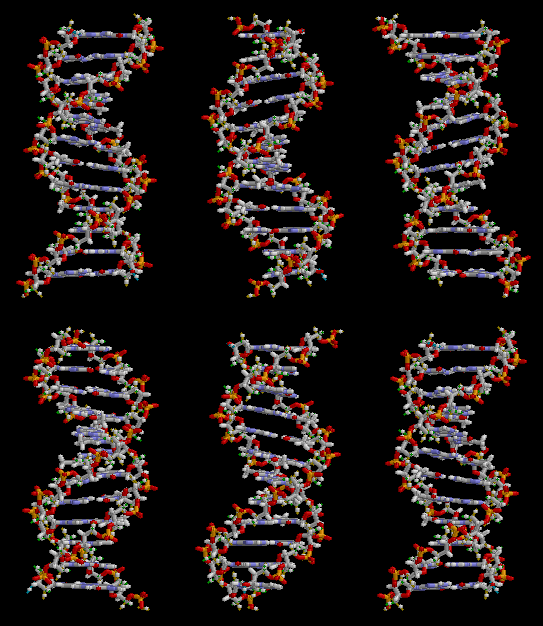 All life – plant and animal – ends in death. The fundamental elements that comprise a body, cell, or plant returns to the Earth or air to be eventually recycled into another life form. This natural cycle of life is disputed by no one. Yet there is one particular life form that is purported to have a separate soul that survives its body’s physical death: the human.
What about non-human life – do they have souls? Some religious texts suggest we are the only life on Earth with souls. But since we are mammals, why would we be the only mammals with souls?
All chimpanzees, gorillas, humans, and apes are primates, sharing up to over 98% identical DNA. House cats and us share at least 90% of the same DNA. Even the ‘lowly’ mouse shares roughly 85% of its DNA with us (which is one reason they are used so extensively in medical research).
On the surface it seems a stretch to assume a mere 2% or so difference in biology would result in 100% difference in ‘soul propagation’; sorry, no souls for you other primates and all other mammals – only humans get souls.
…I suppose it could be argued that all animals have souls, thus neatly solving this logical conundrum. Prior to the development of organized religion, animism was a universally-accepted part of most indigenous tribes’ spiritual beliefs. Animism holds that all life, places, and inanimate objects possess certain spiritual qualities. But even this doesn’t sound right.
Your Soul in Your Body Only?
If we are actually souls occupying physical bodies, were our souls plugged into our bodies at some point, or were they developed from scratch along with our bodies?*
*If there is one official position the Abrahamic religions have on evolution, it is that God plugs a soul into each human body at some point. When this happens is not clear – the official stance is that it just happens.
Are there an infinite number of souls floating around somewhere, waiting to be randomly installed in the next developing fetus, or is each soul plugged into a matching fetus?
Good soul into a ‘bad’ body?
If souls are matched with their host bodies, what about souls plugged into bodies destined to fail miserably? Did those souls deserve their fate? I think we can address this question right now:
It wouldn’t make sense for a god to intentionally install a soul into a body destined to fail early and horribly. What would be the point? To punish a mischievous or evil soul? How can a previously unborn soul be ‘evil?’ To believe this to be the case would be to believe that all children born with terrible deformities or other debilitating or painful diseases deserved their conditions. Nonsense.
What about children who die young: Is there a ‘cut off’ age – before which a kid gets a ‘do-over life’ – after which he is disqualified for being just a day too old for another chance at experiencing all the joys of being alive?
…Or do all people (and perhaps other mammals) have just one shot at biological life; each opportunity lost forever – no matter what the circumstances – when life ends?
Low I.Q. Souls?
If a soul inherits the unique personality of the body (brain) it inhabited, is intelligence inherited too? What about persons born with severe mental retardation? Are their souls retarded too?
In order to be fair, perhaps all souls have the same IQ once their host bodies die. In this scenario, of course, each and every soul would be virtually identical – except for, perhaps, gender. Individuality would be lost, among other significant things.
Souls with Gender?
What about gender for souls – would a deceased person inherit the gender he or she had while alive? Forever female or forever male? And what about people who live their entire lives as a gender other than the ones designated by their birth bodies – what gender would their souls be?
It seems unlikely a soul would have gender. For one thing, gender is only a biological necessity in life for the survival of our species; having a post-death gender would surely be meaningless.
Forever John or Jane Doe?
What about personalities? Not everyone is completely happy with themselves. Surely for some the thought of being the same person – even though only in spirit – for eternity would seem more a punishment than reward.
Many psychologists think a human’s personality is largely developed by age ten or earlier, with only fine-tuning personality tweaks throughout life. So it’s a bit absurd to think the essence that is you – your personality – would continue to exist forever after but a few years of development. But even if it took fifty years for a personality to develop, having that personality exist for eternity still wouldn’t make sense.
…But perhaps there are no personalities in “heaven” or other afterlife. After all, it could be awkward to meet another soul in an ‘afterlife’ who you disliked in life. What would be your greeting? “Oh, I didn’t expect to see you here! But I’m glad I ran into you, because I owe you an apology for the issue that’s been bothering me for eleven thousand years…”
Souls ‘in training?’
Religions obviously have their own versions of afterlives and, by default, souls. Hinduism and Buddhism posits that everyone has a soul in training, so-to-speak: Through reincarnation, a soul (ideally) learns to be a progressively better soul with each successive life.
Infinite “hell” or “heaven” from a finite slice of Earth time?
Some Christian theologians claim each human has a soul which was created when God created the Universe, and will exist for eternity – with its final address listing in “Heaven” or “Hell.”
Obviously this requires a god’s foreknowledge of the exact number of future human births. Surely such foreknowledge would include details about how a soul’s target body would turn out. This begs the question of why an omnipotent, omniscient, and omnibenevolent God would knowingly create souls for bodies destined to fail miserably or a life that will turn out horribly.
This also begs the question of why a good god would knowingly create a soul destined to spend an eternity in hell.
These questions suggest the idea of a heaven or hell — eternal or not — is preposterous.
Ongoing Memory?
What about memory of the past – of when a soul occupied its host body: Would the memory be intact in an afterlife? For instance, would your memory be ‘perfect’ or be the poor memory or good memory unique to the Earthly version of yourself on a good day?
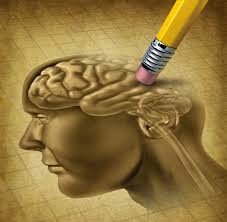 But having memories of Earthly life would surely be a huge burden for some; not all memories are good. Hmmm….perhaps souls are only ‘allowed’ to remember the good memories.
Regardless, you don’t need to be a psychologist or neuroscientist to know it’s our memories that make us unique and form the basis for who we are. Yet it seems unlikely souls would be burdened with their Earthly memories, to say nothing of having no need of them.
Cognitive Neuroscience grad student Dan Lurie responded to the following question:
How significant is our memory in making us who we are?
“Our memories lie at the very core of our conscious experience, and aside from being physically different, the fact that you and I each experience life as two distinct minds is about as fundamental a defining feature of individuality as one is likely to find.
Further, as suggested in the question, our current conscious experience is defined in large part by the totality of the things we have experienced in the past. Even taking into account things like genetic predisposition towards one way of thinking or another, the fact that two people will experience the same event differently (and thus form different memories of it) only adds to the way in which memory defines an individual.
The question asks specifically about personality and emotional intelligence. These specific individual differences are particularly sensitive to being shaped by memory, as they develop in large part due to learning and experience, as opposed to things like executive function which appears to be determined in large part by genetics.
How much do our memories define us? Almost totally.” – Dan Lurie, Cognitive Neuroscience Grad Student
Without your memories you are clueless as to who you are. Therefore, an afterlife without your memory would be meaningless from the standpoint of being able to ‘continue where you left off’; with no memory of your Earthly life, the consciousness that was you would therefore be unable to survive the death of your brain.
Passage of time in an afterlife?
Memory formation requires time
New memories are continually being created and stored in your brain, eventually ‘pushing’ older memories out of the ‘register’ into deeper – and often more difficult to access – storage. Aside from genetic predispositions, this ongoing record of experiences along with your unique conscious awareness of them, completely and totally defines the person that is you.
The process of creating and storing memories occurs over time in the order that the events (and subsequent memories of them) occur. The very concept of time involves events occurring in a certain order:
The “arrow of time” is an expression in physics that describes the order in which events unfold and why there is a past, present, and future. One reason there’s an “arrow” to time is because time had a beginning (“Big Bang”) and ever since, the Universe’s overall order gets progressively less (higher entropy) – explained by the second law of thermodynamics.
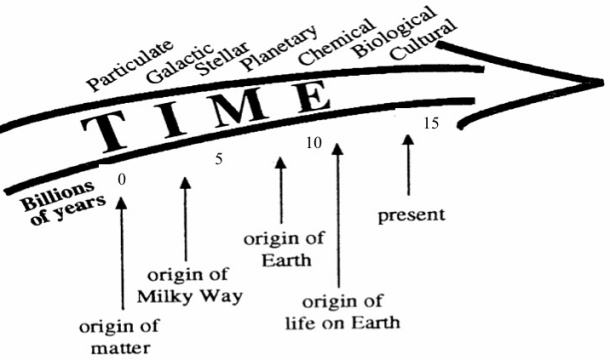
For example, a fresh egg dropped on the floor will break and spatter in the expected way, but the process will never reverse itself – with the egg reassembling itself and ‘flying’ back into the egg carton. Likewise, memories are created and stored over time in the order of your conscious or unconscious awareness of the events on which they’re based (which usually matches the true order of events).
So you need three basic things to create a memory: Time, the event itself, and a medium on which to record and retrieve the event – your brain. Therefore, it seems unlikely memories would be created in any afterlife – brain or not – as time would not be part of any ‘post-life existence.’
If no cognitive experience is possible, the idea of an “afterlife” would be precisely that – an idea.
But let’s suppose you do have your Earthly memories in an afterlife: Unless new memories are continually created in your newfound ‘spiritual realm,’ you’d be stuck with the finite memories you inherited from your biological Earthly self…
Imagine having the same memories of the same life with you for eternity. No matter how good these memories, surely you would grow weary of them after a few decades, to say nothing of a few millennia.
But perhaps the passage of time after death is not experienced the way one might expect…
NDEs (Near Death Experiences)
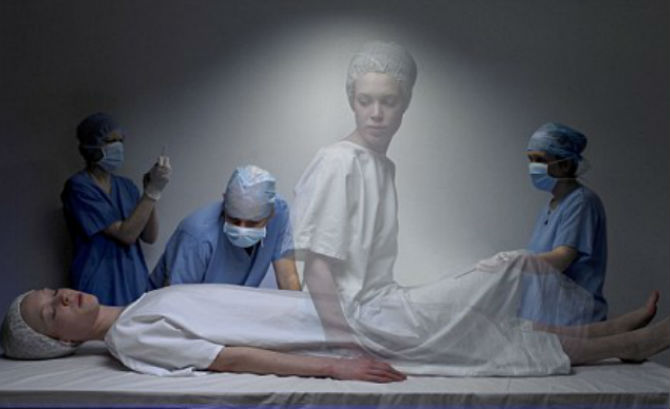
Wikipedia’s definition of a NDE:
“A near-death experience (NDE) is a personal experience associated with death* or impending death, encompassing multiple possible sensations including detachment from the body, feelings of levitation, total serenity, security, warmth, the experience of absolute dissolution, and the presence of a light.” – From this page on Wikipedia
*It should be noted that clinical death is not the same as biological death. Clinical death is when the heart and breathing has stopped. But medical science now routinely enables re-starting of hearts and respiration, so clinical death is not necessarily the end. When a brain’s neurons are biologically dead, however, there is no bringing a person back to life. (But sometimes a person’s brain can be dead but their body can be kept ‘alive’ for the purposes of organ harvesting or next-of-kin visits before ‘the plug is pulled.’ )
Is it even possible to fairly examine the phenomena of Near-Death Experiences without having had one ourselves? Maybe not. But let’s try anyway:
Nothing should be glossed over or assumed. Like trying to define consciousness, perhaps human language is inadequate for describing Near-Death Experiences. In any case, when speaking or writing about any subject in science – especially one with a potential metaphysical quality – choice of words becomes very important. The meaning of a sentence or an entire paragraph can hinge on just one word.
The next sentence is my best effort to define a NDE (Near-Death Experience) as succinctly and accurately as possible in one sentence:
Near-Death Experiences are intangible experiences of patients or former patients based on memories formed during the unconsciousness associated with major trauma and perhaps anesthesia, with a complete cessation of measurable brain activity during at least part of their unconsciousness.
Let’s unpack the bolded words from the above sentence:
The word, intangible is used as a modifier to the word, “experiences” because otherwise the very phrase, “Near-Death Experiences” suggests a self-affirming truth. For example, it would be similar to the sentence, “Does God exist?” rather than the fairer wording, “Does a deity exist?”
The phrase, based on memories is used because NDEs – like all ‘normal’ conscious experiences – are recounted from patients’ memories and mediated by the cognitive biases of which all memories are vulnerable.
The phrase, “…at least part of their unconsciousness” is there to call attention to the fact that a patient’s brain is obviously not shut down a hundred percent of their unconscious time. (So it is unknown if the unconscious time periods preceding and following their brain’s “complete cessation of measurable brain activity” were when a patient formed his or her NDE memory.)
These clarifications may seem like unnecessary subtle distinctions, but it’s important to choose words carefully when the emotional stakes can be so high. We need to hold ourselves to a rigorous level of understanding because, clearly, many of us want to believe in souls and life after death – and NDE stories can appear to confirm our wishful thinking…
Doesn’t mean they’re not true, but it should raise red flags for us to carry – if not healthy skepticism – at least ‘clear thinking glasses’ in our back pockets when thinking about these (thus far) unproved metaphysical topics.
Compelling Stories From Memory by ‘Believable’ People
No doubt most people with compelling NDE stories are telling the truth. I’m quite certain they would pass lie detector tests with flying colors – their stories and the memories on which they’re based seeming more real than the hospital beds on which they laid when they had their NDEs.
But how can we know if what they experienced was based on an objective reality? We all know how our memories cannot be trusted on a good day, much less when we’re stressed.
From Wikipedia’s page, “List of Memory Biases“:
“In psychology and cognitive science, a memory bias is a cognitive bias that either enhances or impairs the recall of a memory (either the chances that the memory will be recalled at all, or the amount of time it takes for it to be recalled, or both), or that alters the content of a reported memory.”
…The entry then goes on to list the 50 memory biases known in psychology and cognitive science.
But the skeptics should not be too quick to dismiss all NDEs as merely vivid memories of hallucinations:
Many people with these stories are not the stereotypical, uneducated ‘alien abductionist‘ sort of folks. No, many are professional, highly-educated pillars of their communities. But what they all share with the “alien abductionists” is a resolute belief that they did indeed depart their bodies, eventually returning into their bodies, but not before various ‘out-of-body’ experiences.
Most NDE stories are very clear and concise, something that would be difficult for a brain that, for all practical purposes, is shut down. (We’ll look into alternative explanations later.)
Dr. Eban Alexander
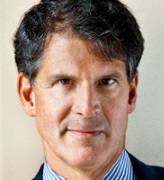
Eban Alexander is a neurosurgeon who contracted meningitis that ultimately spread to his brain. Doctors put him into a drug-induced coma to treat him, as his options for survival diminished. His NDE testimony is very compelling and like many others, Dr. Alexander is convinced he experienced an alternative reality in, perhaps, another dimension of time and space. Like many others with a similar experience, he wrote a book (“Proof of Heaven”) and has been profoundly changed by his NDE experience.
…But before his NDE, Dr. Alexander was a staunch skeptic of others’ NDE stories. His experience as a neurosurgeon and training in neuroscience taught him that such things could be easily explained by firmly established medical science. Specifically, the so-called NDEs people were reporting were nothing more than a brain’s last-ditch efforts at surviving its oxygen-starved state. A state marked by rising levels of carbon dioxide and irregular neurochemicals.
Therefore, Dr. Alexander’s personal NDE testimony is particularly compelling: He is someone who knows the human brain better than most and was once a staunch skeptic of NDE testimonies.
Still, there’s always the other point of view. Here’s a short article posted in Scientific American by ‘dyed-in-the-wool’ skeptic Michael Shermer, who briefly interviewed Dr. Alexander. (It would be interesting if Michael Shermer, like Eban Alexander, would change his opinion of NDEs if he, himself, experienced one.)
The AWARE Study
The AWARE (AWAreness during REsuscitation) study was the first time a serious effort was made to test Near-Death Experiences. It was run by Dr. Sam Parnia and sponsored by the University of Southhampton, U.K. in 2008. A total of fifteen hospitals in the US, the UK, and Austria were enlisted. The study was finished and results were published in 2012.
Here’s a quick summary of the most relevant facts:
Of 2060 cardiac arrest patients, 140 survived to be interviewed. The hospital rooms where resuscitation attempts would most likely occur were prepared with high shelves on which various images were placed, facing up. These images, visible only from above, were intended to provide a test of OBE (Out of Body Experiences): Correctly identifying an image from memory of an OBE would be compelling evidence of a ‘soul’ or separate consciousness.
…Unfortunately, none of the 140 survivors identified an image, but 9 had stories qualifying as NDEs and one had an OBE in which he correctly identified hospital staff and sounds. (The room he was in during his NDE was not one prepared with a shelf and image.)
The study has been criticized by professional NDE researchers as having several significant issues, but generally applauded as a step in the right direction for NDE research overall.
An Interview With David Eagleman
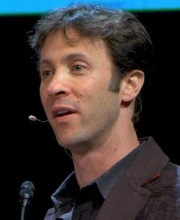
David Eagleman is a brilliant neuroscientist, author of several bestsellers, and an outstanding communicator. In the following short interview of Eagleman by Avi Solomon of boingboing.net, Eagleman manages to touch on several areas – including the experience of time and NDEs – with his typical clear thinking and uniquely-engaging style. That’s why I included the entire interview. Only a couple questions are off-topic, but contain impressive insights nonetheless. Enjoy…
Avi Solomon
What fascinates you about the nature of time?
David Eagleman
We all go through life assuming that time is an external river that flows past us. But experiments in my laboratory over the past decade have shown that this is not precisely the case. Time is an active construction of the brain. We can set up simple experiments to make you believe that a flashed image lasted longer or shorter than it actually did, or that a burst of light happened before you pressed a button (even though you actually caused it with the button), or that a sound is beeping at a faster or slower rate than it actually is, and so on. Time is a rubbery thing.
Avi
How do you account for testimonies of consciousness extending beyond cardiac arrest? What could they imply about the brain?
David
It’s hard to know what to make of these claims. On the one hand, we know that the brain is easily coaxed into hallucinatory states that are taken to be reality: just think of your visually rich, bizarre-but-fully-believed nighttime dreams. On the other hand, although we know a great deal about the details of neurobiology, we have little scientific insight into the existence of private subjective experience — that is, how cells and chemicals achieve consciousness.
So in the end, most scientists will (probably correctly) dismiss a near-death experience as a trick of the brain in a low-oxygen state. However, the vastness of the mysteries before us requires us to keep a tiny bit of room open for a continual re-visiting of the question. As my colleague Ara 13 writes, “No theory is Babe Ruth. Their numbers never get retired.”
Avi
How would you account for the testimonies of a Panoramic Life Review during near-death experiences?
David
I’ve been collecting people’s experiences about this for a while. When people find themselves in an optionless, life-threatening situation (such a sliding on ice toward an oncoming truck, or skidding toward the edge of a cliff on a motorcycle), they will commonly describe the experience of having all their memories present at once. This is not so much a cinematographic “flashing” of their life before their eyes, but instead a simultaneously present “panorama” of memories. And not necessarily big, important memories, but instead small, banal, perhaps meaningless ones. How can we understand what’s going on here?
First, in the 1950s, neurosurgeon Wilder Penfield stimulated the temporal lobe of patients undergoing brain surgery, and he discovered that a little buzz of electricity in the right spot in the temporal lobe could trigger a vividly experienced memory—such as standing in a parking lot speaking with someone, or listening to a particular symphony. So we know the memories are stored in there. When the brain is driven into an extraordinary situation of impending doom, it moves out of its normal operating range and somehow all these memories bubble into conscious awareness. It may well be that the brain is ‘searching’ for any possible solution to a very bad problem, and in its desperation pulls out all the stops. I see panoramic memory as a terrific inroad into understanding consciousness.
Avi
What do you make of the experience of Deja Vu?
David
It seems clear that people experiencing deja vu are not actually detecting the future. This is easily demonstrable: the next time a friend says she’s experiencing deja vu, quickly pull out twenty dollars and offer it to give it to her if she can tell you what’s going to happen next. You won’t lose. Instead, your friend will merely be able to report that after something happened she feels as though she knew it was going to happen. So there appears to be nothing time-violating about it. Instead, deja vu appears to be a hiccup of the familiarity systems in the brain — the same systems that tell you a bizarre situation in a dream is something normal, something you’ve seen before.
Avi
Do you have a generic method for thinking up innovative experiments?
David
The only general strategy I employ is to avoid the places where everyone else is going. The most delicious fruits in science are often found in the places where no one else is looking. Relatedly, it’s an old axiom in science that the exclamation that signals a rich discovery is not “Eureka!”, but more often “That’s strange.” So that’s where I try to position myself, around the “that’s strange” phenomena.
Avi
There are roughly 50 galaxies or 10 trillion stars per person in the currently known universe. Why do you think we all glibly forget this amazing fact? How can we keep wonder alive everyday?
David
Indeed, I’m often surprised that people aren’t talking about these issues all the time. But the reason seems clear enough. Our brains have evolved to deal with issues at our own scales: mates, rivers, apples, rabbits, and so on. Our brains simply weren’t built to understand the fabric of reality at the very small scales (quantum mechnics) or the very large (the cosmos). As Blaise Pascal put it, “Man is equally incapable of seeing the nothingness from which he emerges and the infinity in which he is engulfed.”
Avi
What advice would you give to a smart kid who’s now in high school?
David
Watch TED talks: smart people will distill their life’s work down to 20 minutes for you. Follow links through infinite trajectories of Wikipedia. Watch educational videos on topics that resonate with you.
There are a million ways to waste time on the net; reject those in favor of ways that teach you exactly what you want to know. Never before have we enjoyed such an opportunity for tailored, individualized education.
And be sure to get off-line often, to take digital sabbaths. As much as the net provides a platter of mankind’s learning, there is a different kind of learning to be had from a hike in the woods, the climbing of a tree, an afternoon building a dam in a stream.
The Main Issues Currently Challenging OBEs (Out-of-Body Experiences)
Do people who experience NDEs actually depart their bodies? The difficulty with sincerely believing the answer is “yes” boils down to three points:
First point
The stories – compelling though they are – are told from memory; there’s no way they could be independently verified until if and when another “AWARE” sort of study is done with patients successfully identifying objects or images otherwise unknowable to their unconscious selves. What’s more, patients are typically unable to recount their experiences from memory until days have passed, due to ordinary medical recovery times.
Second point
There is heightened brain activity in the moments after cardiac arrest – moments shown to be as long as 30 seconds or more in rats. The implications the smaller rodent brains’ accelerated activity have for the much larger human brain is telling. Re-read David Eagleman’s response to the interview question (above) about “…testimonies of a Panoramic Life Review during near-death experiences.”
Third point
The period of time preceding wakefulness from the medical condition that led to the NDE (including recovery from any anesthetics) can be protracted. The brain’s semi-conscious, pre-wakeful state is typically associated with REM sleep (and, therefore, dreaming).
Anita Moorjani

On the 25th and 26th of January, 2014, my wife, Lise, and I attended a seminar hosted by Wayne Dyer. It was held at the Westin Hotel on Maui, Hawaii, and one of the keynote speakers was Anita Moorjani.
…We listened with rapt attention as Anita related her fascinating NDE experience. Hers was probably as compelling and believable as any. She, too, wrote a book on her experience (“Dying To Be Me”) and like Eban Alexander’s, became a best-seller. Her life was profoundly changed and she has done little since her NDE but travel the world telling her amazing, nearly-unbelievable story.
Clearly, many people (including Lise and I) are enthralled with NDE stories. We want them to be true, no doubt at least partly because they sound too good to be true: Our imaginations help us to experience some of the “infinite love” and dreamy feeling of a paradise just beyond our current reality – so eloquently described by Anita Moorjani and many other NDE storytellers.
…Is this ‘heaven’? we wonder. Is this a glimpse of a “soul” temporarily departed from a body? Or perhaps there’s no such thing as the Biblical heaven, and NDEs are a sneak-peek into a different – even better – eventuality awaiting us all. Is this the epitome of optimism – our minds seeking, yearning for something (anything?) that might guarantee its continued survival?
The realization that we’re prone* to believe NDE stories (and other ‘afterlife’ narratives) does not necessarily mean they’re false. They may or may not describe a reality beyond complete physical death; the case is unproved and – like other metaphysical questions – we’re going to have to live with that uncertainty.
*Prone to overlook alternative (skeptical) explanations for NDEs.
…Perhaps that uncertainty will someday prove temporary.
The Unspoken ‘Elephant In the Room’ Possibility
As humans, we often have a tendency to consider only opposites: Black or white – not shades of gray; here or there – not in between. Or either an intervening God or no God – not a passive Creator. Death or everlasting life – not temporary life.
Most of us want very badly to survive the deaths of our bodies. Even people who consider suicide often want to depart ‘just this life.’ And most people who profess belief in heaven don’t want to die to get there.
…This basic human need stems from our knowledge of time and the future, specifically time running out.
“Man alone chimes the hour. And, because of this, man alone suffers a paralyzing fear that no other creature endures. A fear of time running out.” – Mitch Albom
Perhaps this is why almost no one considers an otherwise obvious possibility for the post-death existence of a “soul” or consciousness:
Perhaps the essence that is you does indeed exist after the death of your brain, but only for a limited stretch of time….perhaps only for a few seconds, minutes, or hours at most…
…before fading away 🙁
As unappealing as this possibility may be – which is surely the reason it is seldom if ever considered – this could very well be the reality awaiting us all.*
*For what it’s worth, I’ve held an alternative possibility in mind, unchanged since my teen years. A possibility needing no metaphysical assumptions, based on what we do know. Read “Birth-Life-Next?” for a look at this intriguing possibility.