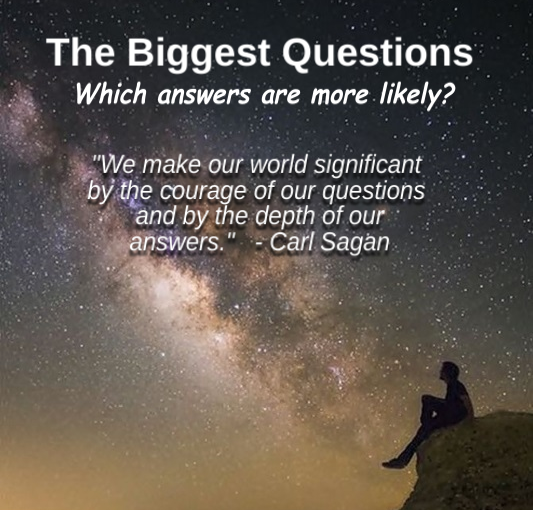
I’m glad you’re here and I hope you find something interesting or, ideally, enlightening. But before you dive into the Articles, it’s important that you read and digest this Introduction in its entirety. The reason it’s important is for you to have the right mindset — and you cannot assume you do.
First, a few words on how this book got started. While it eventually became fun researching and writing, it began as something quite different…
My awesome wife, Lise (pronounced “Lisa”), had the unfortunate experience of being in a church for many years that slowly but surely ‘morphed’ into a cult church. Spiritual abuse was its specialty. Thankfully, she — along with many of her lifelong friends — had the good sense to leave the church (which wasn’t as easy as you might think after so many years).
I was astounded that otherwise intelligent people would allow themselves to remain involved in such an organization for as long as they did. After all, these aren’t the stereotypical gullible, uneducated sorts one might associate with such things. How can smart people allow this to happen in modern times?
I was positively flummoxed.
This made me take a hard look at my own religious beliefs (or lack thereof). I remembered my childhood as a ‘kid skeptic’ and thought it helpful to type out my youthful experiences in a simple Google doc. I had no specific plan — other than some dim view this might ‘help me help Lise get past her past,’ if you know what I mean.
Starting with “A Nine-year-old Skeptic’s Search for God,” I realized the subject called for other related articles before I could move on.
…That’s because the whole business of religion begs other (equally profound) and (in my opinion) more interesting questions of existence. Questions we all have at one time or another. Writing and researching possible answers to these questions became fun. The subjects required lots of deep thinking that got my neglected brain a welcome workout.
Some people who know me from skydiving or the Army may think I’ve lost my mind. The reality, however, is that I’ve found it.
We all want to know answers to the Big Questions of life. But since most are unknowable, we ponder them only when we have the time, realizing they will be there whenever we return.
Not everyone, however, has the time to really ‘think them through.’ Besides having the time, I have pondered the Big Questions starting when I was nine. But I don’t pretend for a moment to have the answers. Besides, I am no smarter than you.
“To ask questions can become the laziest and wobbliest occupation of a mind, but when you must yourself answer the problem that you have posed, you will meditate your question with care and frame it with precision.” – James Stephens
How to Have the Right Mindset About the Big Questions
Like yourself, I have my opinions.* But one recurring maxim you’ll see here is “While we are all entitled to our own beliefs and opinions, nobody is entitled to their own facts.”
*Sporadically throughout this book, you’ll see “IMO” — abbreviation for “in my opinion.” The absence of “IMO,” however, does not imply the writing is necessarily factual. Moreover, my opinions are no better than yours.
There are several other important maxims that have, more or less, guided my writing. You’ll see them in a moment. The reason it’s important to acknowledge them is because most answers to the Big Questions are unknowable: Without guiding principles, the writing would be no different than any other on the web and in print reflecting the beliefs and opinions of its authors.
Since the Big Questions necessarily include ones about religion and the possibility of our conscious ‘selves’ surviving the deaths of our bodies, people often become attached to their beliefs and opinions. Emotions tend to run high, which clouds otherwise clear thinking. Logic and valid deductive reasoning get abandoned for (what amounts to) wishful thinking — since there can be no real proof supporting a particular viewpoint.
Below are real headlines of articles posted on some blogs and websites. Notice the words I’ve bolded:
- “Proof of God: My NDE/Vision of Hell & Testimony”
- “Why a Near-Death Experience Isn’t Proof of Heaven”
- “Near-Death Experiences Prove God Exists”
- “God Is Imaginary”
- “Quantum Theory Proves that Consciousness Moves to Another Universe After Death”
- “At Last! A Tenable Theory about How Consciousness Creates the Mind and Brain”
- “The Proof that Prayer Works”
- “Prayer Absolutely, Positively Does Not Work”
- “Scientists Say They Have Found Proof of the Human Soul”
- “You Don’t Have a Soul: The Real Science that Debunks Superstitious Charlatans”
…There are probably thousands of other similarly-conclusive headlines and article titles, each purporting to announce a long-awaited answer to some profound question with confident certainty. It’s as if each author has discovered a fundamental truth that will become obvious to all who read their article.
No doubt most of those authors firmly believe their opinions and beliefs to be representative of an objective reality, which is surely one reason their writings can be so persuasive. (Even ‘alien abductionists,’ for example, routinely pass lie detector tests — so convinced they are of their ‘experiences.’)
Without even realizing it, they are guilty of the same thing you and I have fallen prey to at times:
Confirmation bias — maybe the most insidious and powerful cognitive bias.
Confirmation bias is the tendency to search for, interpret, favor, and recall information in a way that confirms or supports one’s prior beliefs or values. People tend to unconsciously select information that supports their views while ignoring non-supportive information. People also tend to interpret ambiguous evidence as supporting their existing position. This effect is strongest for emotionally charged issues, and for deeply entrenched beliefs. – (From this Wikipedia page)
One of my favorite quotes (which you’ll see more than once because it rings true) is by the 18th century historian and philosopher, François-Marie Arouet, who preferred to be called by his pseudonym, “Voltaire”:
“The human brain is a complex organ with the wonderful power of enabling man to find reasons for continuing to believe whatever it is that he wants to believe.” – Voltaire
Useless Claims on the Truth
There are true answers to each of life’s Big Questions, but of course they’re not obvious (besides being unknowable). And if an answer does seem obvious, be especially on guard for your own confirmation bias. Having an answer to a question such as, “Does a God truly exist” with confident certainty is not only arrogant but absurd.
We all have certain biases, no matter how ‘fair and balanced’ we may self-righteously claim to be. After all, we’re human. There’s a Wikipedia page listing fifty cognitive biases all humans share, but it seems a bit overdone to me. (Funny there’s exactly fifty.)
Put simply, the attitudes and opinions of all humans are shaped by a combination of influences, including but not limited to:
- Our parents (who are rarely wrong, of course)
- Our culture (which may not be perfect but is the best in the world, of course)
- Our education (we’re each smart — no matter our education, of course)
- Our chosen religion (often ‘chosen’ by our culture but is nevertheless the best in the world, of course)
- Our individual personalities (the product of genetic predispositions and personal experiences resulting in a person who sees the world as it truly is, of course)
Is a ‘Fair and Balanced’ Article on a Metaphysical Topic Even Possible?
So where does that above (tongue-in-cheek) list leave us? With preconceived notions practically hard-wired into us, is it even possible to be fair and balanced?
It’s obvious we need one or more principles to help steer us past our biases. But how could we even agree on what these “principles” are when the emotional stakes are so high? It would be nice if there was some sort of ‘official’ guidance to keep us honest and impartial…
Turns out there is such a formula — designed for physical science but (as you’ll see) is useful for metaphysical* topics as well.
*Metaphysics — met-uh–fiz-iks noun
From the Greek meta ta physika (“after the things of nature”).
– the branch of philosophy that deals with the first principles of things, including abstract concepts such as being, knowing, substance, cause, identity, time, and space;
– the studies of everything outside of objective reality; unprovable and untestable knowledge.
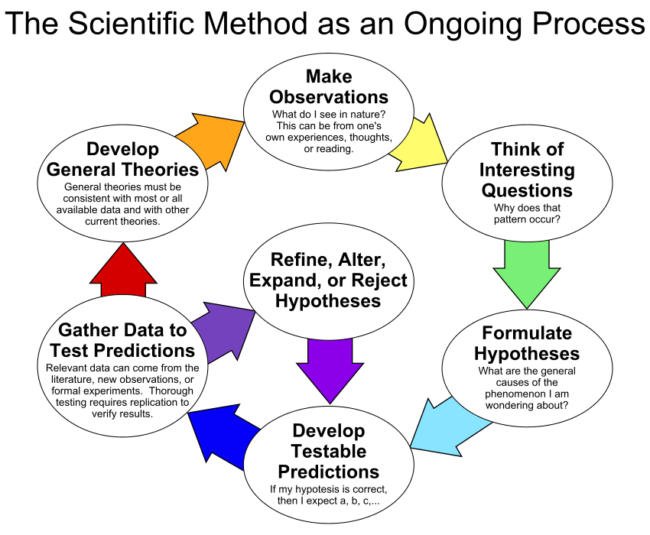
It’s called the Scientific Method, and its use is largely responsible for the relentless and rapid leaps in knowledge leading to discoveries that paved the way for the cell phone in your pocket, high-tech medical devices that have helped you or your family, the Hubble space telescope, cars and airplanes, etc.
It’s based on the guiding principle that any claim to truth must be evidence-based but that none can be unassailably conclusive; if a better hypothesis comes along, it can unseat an incumbent ‘truth.’
The essence of the independent mind lies not in what it thinks but in how it thinks.” — Christopher Hitchens
But wait: We know some of the Biggest Questions are not science questions — metaphysical or not — so how can the Scientific Method be of any help? After all, most of the ‘Big Answers’ would not even qualify as bona fide hypotheses, much less theories.
Here’s how: We can use it as a ‘thinking model.’ The very existence of the Scientific Method suggests how to think is as important — perhaps even more so — than what to think. It sets a great example. It is an open-source, ongoing process that never calls for conclusive proof but for which answers seem more likely than others.
Which Answers to “The Biggest Questions” Are More Likely Than Others?
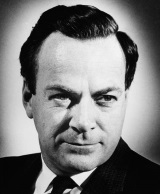
Richard Feynman was a Nobel Prize-winning theoretical physicist who was known for his down-to-earth way of communicating otherwise complex science. Next to Einstein, Feynman may have had more influence than any other physicist in the twentieth century. Many of his lectures are archived on YouTube and are as entertaining as they are educational. The below quote is from a series of lectures called “The Character of Physical Law” he gave to students at Cornell University in 1964:
“I had a conversation about flying saucers some years ago with someone. I said I don’t think there are flying saucers. My antagonist said, ‘Is it impossible that there are flying saucers – can you prove that it’s impossible?’
I said no I can’t prove it’s impossible, it’s just very unlikely. He said ‘you are being very unscientific — if you can’t prove it impossible then how can you say it’s unlikely?’
I said well, it IS scientific to say only what is more likely than less likely. (Bolding is mine). To define what I mean, I finally said to him, Listen, I mean from my knowledge of the world that I see around me, I think that it is much more likely that the reports of flying saucers* are the result of the known irrational characteristics of terrestrial intelligence rather than the unknown rational efforts of extraterrestrial intelligence.
It’s just more likely — that’s all, and it’s a good guess. And we always try to guess the most likely explanation, keeping in the back of the mind that if it doesn’t work, then we must discuss the other possibilities.” – Richard Feynman
*In the article, “Are We Alone?” we’ll look at some compelling evidence that suggests not ALL sightings should be dismissed as terrestrial in origin.
This is all we can realistically hope for some of the Biggest Questions of life: Some answers may seem more likely than others, but claiming any one of them to be true can seem foolish and puts you squarely into opinion — no better or worse than any other opposing opinion.
“I can live with doubt and uncertainty and not knowing. I think it’s much more interesting to live not knowing than to have answers which might be wrong.” – Richard Feynman
Authority Figures
The scientific method removes authority from authority figures who have historically ruled on metaphysical questions with the audible pound of a gavel. Blindly accepting information from any and all authority figures has a bad track record stretching from medieval times to the present day (e.g., the Salem Witch Trials, 2019 U.S. President denial of pandemic).
“I would rather have questions that can’t be answered than answers that can’t be questioned.” – Richard Feynman
In science there are no authorities; at most there are “experts.” And this distinction is bolstered by a universally-agreed upon method of how to think – the scientific method. But the Scientific Method is not the only “clear thinking tool” available to us.*
*Read “How Can We Be Sure Something Is Actually True,” following the Introduction, if you’re interested. (It’s in the Table of Contents — clickable list on right side of this site.)
So Where Do We Start?
We should start by acknowledging theological and other metaphysical claims — such as belief in divinity, afterlife, and so on cannot be proven — which is why heated debates never, ever, lead anywhere…
Then we can see the wisdom and usefulness of the following guiding principles:
1. We must acknowledge the limits of our knowledge and strive to recognize where facts become speculation and legitimate theory becomes guesswork. Then we can see how certainty is actually delusional wishful-thinking.*
“Uncertainty is an uncomfortable position. But certainty is an absurd one.” – Voltaire.
*We humans have a historic tendency to ‘fill in the blanks’ left open by our otherwise innocent ignorance with the more attractive fictional accounts of things. With time, the fictional accounts become accepted as ‘fact,’ and people will defend them based on little more than an ‘it’s always been this way’ sort of thinking; ‘how dare you question the status quo.’ Moreover, the reasons the fictional accounts were more attractive at the start remain so today.
…Some beliefs are described as “cherished” because we simply want them to be true. This doesn’t mean they’re not true, but it should raise red flags for you to (at least) carry a bit of healthy skepticism ‘in your back pocket.’
“If you are searching for sacred knowledge and not just a palliative for your fears, then you will train yourself to be a good skeptic.” – Ann Druyan
2. We cannot always trust our perceptions: Although the way we perceive things is often correct, our perceptions of reality can fool us into accepting as fact what later proves false. For example, our perceptions once confidently informed us the Earth was the center of the Universe, diseases were caused by demons, and thunder was caused by angry deities.
3. We must acknowledge our human psychological, emotionally-laden biases that we all have. This means we must stop ourselves short of claiming any metaphysical idea to be true with confident finality…
At most, we can only say our opinion is supported by what we believe to be compelling evidence.
“If you want to assert a truth, first make sure it’s not just an opinion that you desperately want to be true.” – Neil DeGrasse Tyson
In the end, we may all have to agree to disagree, but hopefully we’ll be a bit more cognizant of why we disagree. At that point we can coolly acknowledge there are some areas that no viewpoint can tread without passing into emotionally laden, biased opinion.
The Most Important Maxim for This Book
The most important maxim for this book is one you’ve heard before:
“TRUTH IS STRANGER THAN FICTION.” This simple adage rings true for a good reason…
No matter how much the domain of science discovers, no matter how many ‘game-changing’ advancements in technology are made, no matter how deep and wide science delves into areas previously considered ‘untouchably sacred’ — our increased knowledge of the Universe and our place in it will not change our sense of beauty, awe, wonder, and appreciation.
“The larger the island of knowledge, the longer the shoreline of wonder.” – Ralph W. Sockman
Think back to when, in school, you learned that all normal matter is made of atoms. Did this new knowledge change your attitude about nature? Knowing the ocean is made of gazillions of atoms of oxygen and hydrogen linked into chemical bonds forming molecules called H2O — did this knowledge make you ‘see’ the ocean with any less appreciation of its beauty?
Question Everything, Conclude Nothing…Yet
By reading this book, you may change your outlook on at least one of the Big Questions, maybe more. Although definitive answers are not forthcoming, you may be better equipped to see which answers appear more likely.
“We get wise by asking questions, and even if these are not answered, we get wise, for a well-packed question carries its answer on its back as a snail carries its shell.” – James Stephens
I caution you, however, in making up your mind in the absence of proof, because any conclusion should be evidence-based. If you, like myself, are a fan of good science, the scientific method, and clear thinking, you won’t be afraid to utter these three words:
“I don’t know.”
“The important thing is to not stop questioning. Curiosity has its own reason for existence. One cannot help but be in awe when he contemplates the mysteries of eternity, of life, of the marvelous structure of reality. It is enough if one tries merely to comprehend a little of this mystery each day.” – Albert Einstein
So it’s with this in mind I urge you to keep a deep respect for the opinions of others. Remind yourself that it’s the noble pursuit of truth that really matters; the truth itself might never be known.
Note 1: No need to read the Articles in order; they are standalone, so feel free to skip around — which is why they’re called “articles” instead of “chapters.” (But some have accompanying sub-articles that are written to go with the parent article.)
Note 2: Sometimes it’s better to read an entire article first, then go back and click on links. (Links open in a new tab; no need to hit the backspace arrow to return to your place in the book.)
Note 3: The subject areas in some articles overlap, which is why you’ll see a few quotes more than once.