What do we really mean when we say, “Our Sense of Time”?
How we perceive the passage of time is a huge part of our human experience. It’s a subject worth delving into for some fascinating and useful insights.
Your brain comes wired to interpret signals that enable sight, hearing, taste, touch, and smell — the five ‘classic’ senses. But what about your sense of time, a.k.a. time perception?
Generally speaking, it seems our sense of time is derived from two areas:
Our memories of events* in the order they occurred (our ‘personal timeline’) and…
Our ‘built-in’ sense of time.**
*An event is anything committed to memory. Obviously, we remember only past events, and it’s important to realize this timeline is unique to each of us.
**Our “built-in” sense of time refers to our brains’ internal time clocks: There is evidence the hippocampus can act as a ‘metronome’ that informs other parts of the brain about the passage of time. It appears our conscious minds are not keenly informed by this biological time keeper, but our autonomic body systems — such as our sleep cycles (“circadian clock”) — are at least partly informed by it. Other brain areas working together are also thought to contribute to our overall perception of time, but the neural processes involved are currently not well understood. The title of an article posted on Wired sums it up best: “Your Brain Doesn’t Contain Memories. It IS Memories.”
Recently, researchers at Brown University announced their findings of neurons in rodent brains that acted as metronomes – spiking rhythmically and also in synchronization. Since humans share around eighty-five percent identical DNA with rodents, it will be interesting to see if future research shows we share this neurological time-keeping trait.
One thing is sure, however: Our memories are our main source of record-keeping and therefore our primary source of time perception for our conscious minds.
Why Are We Always Flummoxed by the Passage of Time?
Besides death and taxes, there is one trait common to all humans:
We — one and all — experience a daily, lifelong bewilderment about time. Specifically, about how much time has elapsed without being keenly aware of it.
You might think we’d get a handle on our own sense of (the passage of) time after so many years. After all, we have clocks, watches, computers, phones, and other media constantly reminding us how much time has elapsed since our last time check. From the moment we get out of bed, we are usually reminded of the current time — all the way until we lay back down in bed to sleep.
…Yet from stay-at-home-mom to CEO, rarely a day goes by that we don’t exclaim, “Gosh, where did the time go?!”
The interesting thing is we are truly taken by surprise in these moments. One reason is likely because — when we’re not looking at a clock — we are in the process of forming new memories while engrossed in a task; we are therefore not consciously aware of the passage of time but of the task at hand.
Flowing with/in Time
This is especially true when we’re in the ‘flow‘ — also known as ‘in the zone’ — deeply focused on a task. For example playing competitive sports, writing a novel, building or repairing something that requires concentration and creativity, or painting on canvas. Artists and musicians get in the flow all the time.
While creativity — using two or more seemingly unrelated ideas to accomplish a goal — is identified with being deep into “flow,” surely we all experience varying degrees of flow in our daily lives — artists or not (which affects our time perception).
For example, cooking from scratch, gluing together something broken, pondering the meaning of life — anything requiring above average focus.
But what about more mundane things, like making coffee, reading today’s news, exercise routines, etc. — any habitual action that requires no creativity? Surely our everyday ‘normal’ experiences still require a significant investment of our attention span, leaving less for conscious time perception.
For example, you’re reading a good book when you realize it’s 10 am and you are still in your sleepwear, yet you thought the time was closer to 9 am.
The reality is while we are experiencing our present moments — experiencing life as it happens — we are physically and mentally in the flow of time and therefore unable to easily view our progress since an arbitrary point in the past. An analogy would be someone floating along in a river while reading a book, unaware of their progress downstream in comparison to a fixed point.
“A watched pot never boils”
Although the human brain is the undisputed king of thinking (at least here on Earth), we are incapable of effectively focusing on more than one thing at a time. Continually splitting our attention between a clock and our task at hand is ineffective.
So even though we’re continuously surprised by the late hour, frequent glances at a clock are not practical. One way to make time appear to slow down, however, would be to stare at a clock (or at a pot of water while waiting for it to boil). You might be experiencing every moment of time, but it’s not a fun way to live.
Time Perception Cannot be Taught in School
The reality is a “sense of time” cannot be taught in school or acquired by any other means than experience. This experience is almost totally comprised of our memories, which are unique to each of us.
Why Our Memories Are Our Sense of Time
Despite the best efforts of our brains’ natural time keepers and our conscious awareness of clocks, we will always remain at least slightly disoriented about the passage of time throughout our lives. Here’s why:
Each person’s life experiences are unique:
No two persons experience life exactly the same. Therefore — just for this reason only — no two persons’ memories are identical. Everyone’s life experiences — from waking up in the morning to going to sleep at night — are unique. Some may be similar, but no two are exactly alike.
Your perceived length of each moment, each day, each week, month, year, and longer is recalled as a series of events unique to your memory and your memory only.
Some periods of time just seem to last longer than others. For example, a year of difficult studies and exams at school will seem to last longer than a year of fun and easy routine.
Each person creates, stores, and retrieves (“recalls” or “remembers”) memories of events in vastly varied ways:
Even if two or more persons experience the exact same event, the variables involved in processing a memory are so great, it would be virtually impossible for any two persons to have identical memories — not even close. This is why even eye-witness testimonies in courts are notoriously error prone.
…These variables stem from the three main aspects of memory — encoding, storage, and retrieval. The actual physical processes involved with memory are far more complex than these three general descriptions, but for the purpose of understanding our memories’ effects on our sense of time, such detailed knowledge is unnecessary.
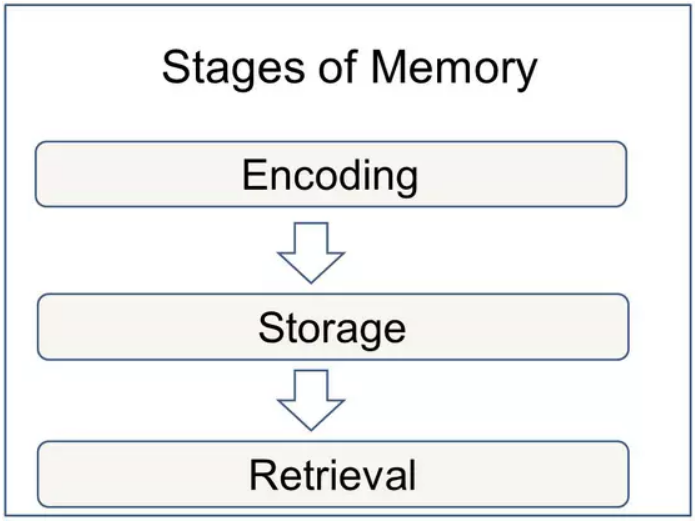
These variables guarantee our sense of time will always be fluid, ambiguous, and unreliable.
Our memories are not unambiguous video and audio recordings; they are not a perfect representation of the events from which they are formed. Memories are actually constructs of the brain after-the-fact; a combination of sights, sounds, and our conscious thoughts and feelings we had at the time of the event on which a memory is based…
But it doesn’t stop there: There’s also the huge effect our subconscious minds have on our memories as they are being formed. And then there’s the ongoing ‘morphing’ of memories over time; our brains’ gradual amendments to each memory after the event.
The longer the time period after the event, the higher the chance a memory is altered; little details get fuzzy followed by the fuzzying of more significant details over longer periods.
Encoding (forming) a Memory
Encoding is the unique way you consciously and subconsciously turn an event you experience into data that can be stored for later recall.
Think of times you’ve been involved in a task or watching a movie, but you had a nagging feeling that something was not quite right; you couldn’t quite place what was affecting your present moments, but you realized your attention span was being adversely affected, if only subtly. As a result you were paying only partial attention to the task at hand or movie you were watching.
For example, you’ve been watching a movie for twenty minutes when you suddenly realize you left the back door open or unlocked. You are now able to relax a bit more and enjoy the movie because you’ve discovered the reason for the nagging feeling…
So the twenty minute period preceding this discovery is not encoded very effectively as a memory; days later when discussing the movie with your friend, you can’t recall that twenty-minute section of the movie as well as your friend.
This sort of thing really affects memories 100 percent of the time; there’s always something stirring around in your subconscious — just below the surface of your direct, conscious scrutiny — that is keeping you from focusing a hundred percent on whatever it is you are doing. So your friend’s memory of the exact same event will always be different than yours, and thus your sense of time will always be unique.
Memory Biases Affect Encoding of Memories
Some of the subconscious effects on our memories (and thus our sense of time) are from any combination of the fifty memory biases that psychologists have identified. One of the most powerful may be confirmation bias. Regardless, one hundred percent of our memories are affected by memory biases, which also affect our recall of their locations on our personal timelines.
One bias affecting how we encode a memory is whether we’ve had a similar experience before; brand new experiences may be encoded differently than a routine one. For example, if you’ve seen lots of surfing competitions, you might not remember any particular one. But if you see only one surfing competition, you’ll probably remember the size of the waves and maybe a particular surfer.
Past experiences color your expectations of future memories, and may confuse your recall of an event.
Accurately remembering a date does not mean accurately remembering its event
Some memories we might encode accurately by date — such as the birth of a child, an event like 9-11, and so on. These otherwise unambiguous ‘time stamps’ on our personal timelines do not mean our memories of the actual events they mark are remembered accurately.
The details are likely far more fluid, and it’s this fluidity that ensures no two persons on the planet will ever have the same perception of the same event — despite having committed specific dates to long-term memory. Thus no two persons will have the same perception of time.
Habits and routines affect time perception
Some of the neural pathways in our brains are reinforced from repeated usage, ‘burning in’ those circuits over time. Any action you do on a repetitive basis, such as driving a car or playing a sport become easier as you gain more experience. Less and less mental effort is needed to perform those activities. We’re fond of calling it “muscle memory,” when actually it’s all in the brain.
…Regardless, the result is after lots of practice you can drive a car, play a musical instrument, or do any number of other habitual activities without having to consciously think about how to do it correctly and efficiently. So you can tune a radio while safely driving or think of what to make for dinner while playing a familiar song on the guitar.
Time will appear to pass quicker when your brain is operating on a previously-learned ‘subroutine’ as opposed to learning something new.
Creating Your Overall Sense of Time
Your personal “time line” is a unique string of your memories — the most recent one added onto the end of the next most recent, and so on. This is why our perceptions of the passage of time — its duration — are unique.
Whether you’re ‘looking back’ (examining a memory) of something that happened one minute ago or an event that occurred five years ago, it’s only through this process of examining your memories that you can get an overall sense of time.
The Stopped Clock Illusion
A bizarre phenomena you’ve likely experienced is the “stopped clock illusion.” You glance at a clock and are surprised to notice the second hand has frozen. For a moment you might think the clock has stopped working. Then — after what seems like more than a second later — the second hand starts moving normally again. This is a result of a trick of your brain called saccadic chronostasis.
Chronostasis results from the way our brains serve up a ‘package’ of sights, sounds and touch as if we were experiencing them at the precise time they actually occurred. As explained in the parent chapter on time under the subheading, ‘What duration of time is the present moment?,’ neuroscience now shows how we firmly but mistakenly believe we are experiencing each present moment as it actually happens, when in reality our experience of the present is on a slight time delay…
This delay is necessary because your sensory inputs — visual, auditory, smell, touch, and proprioceptive (sense of position in your 3-dimensional space) get processed at vastly different speeds. So your brain waits until all inputs have been processed before delivering them as a package to your conscious mind. The stopped clock illusion is a glimpse ‘behind the curtain’ of your brain’s effort to pull this trick off. It starts with the saccade (your eye movement to the clock):
Unlike a camera, your brain does not attempt to process the motion-blurred imagery that results from your eyes’ sweep across the room to the clock. It simply ‘edits out’ that portion of your visual experience, saving processing time of imagery that you don’t really need anyway; all you’re interested in is whatever you are switching your attention to, which in this case is the clock.
The processing time now saved by your brain’s shortcut gets transferred to the first image you stop your eyes on. So you end up experiencing slightly extra time added on to your first glance. The actual time elapsed is the same, it’s your experience that is slightly altered.
Two Reasons Why Time Seems to Speed Up the Older You Get
- Because the ‘unremembered’ time between memories disappears; you end up with a string of relatively few events spanning years. The intervening time is ‘gone.’ (“Where did the time go?!”)
As noted earlier, our memories are not unambiguous video and audio recordings like a movie. We clearly remember only certain events. We don’t remember entire days from start to finish — to say nothing of weeks or months. Most are just moments; a kiss, a feeling you had, an image, and so on.
We remember moments, not entire days.
2. Each additional event you experience becomes a memory which is formed against a backdrop of all your memories. Therefore each becomes an ever-shrinking fraction of your total memories to date.
Think back to the earliest year of life you can remember. Your third birthday, for example, represented one-third of your entire life. Your fiftieth birthday, however, celebrates merely one-fiftieth of your birth-to-present timeline, so time appears to pass faster the older you get.
…Of course, time passes at the same rate for everyone; it’s only in retrospect — looking back — that you can experience this effect. But then, this is the only meaningful way we have to judge the passage of time — by examining our memories!
Memory ‘Re-runs’ Reinforce (and ‘morph’) Memories
We fondly remember good memories, of course, and return to these when something reminds us of them. Same for bad memories. After years of ‘re-experiencing’ these moments by thinking of them, we reinforce them (and — intentionally or not — ‘morph’ them to some degree). These ‘memory re-runs’ keep these events fresh in our minds, regardless of how inaccurate they become compared to an actual video recording of the moment or event.*
*And when you do have an actual video recording of an event, it doesn’t tell the whole story: Your true range of thoughts and feelings experienced during the event are not recorded on the videotape.
The more we ‘re-experience’ memories, the more we reinforce them and simultaneously forget the intervening time between the events on which they are based. This intervening time tends to ‘disappear,’ resulting in the feeling that time has sped up.
Short Durations of Time Are Relatively Easy to ‘Know’
Say you use a three-minute egg timer each morning for a year to ensure your eggs are cooked the way you like. After a few months you will likely gain an instinctive feel for the duration of three minutes. You could retire the egg timer and use just your judgement of when to remove the eggs from the stove and probably get it right.
Longer time periods, however, get progressively more error-prone as there are simply too many minutes to keep track of. This is where clocks and calendars are a must if you want to arrive to work on time or plan for future present moments.
No Memory, No Sense of Time
Without your memories, time has no meaning.
People who have “retrograde amnesia” are unable to recall events that occurred before their brain’s disease or injury. Their sense of time — their personal timeline — is therefore limited to everything that happened after their medical event.
There’s a fellow who lives in San Francisco with a strange medical condition. John Doe acquired a virus that consumed it’s way — tunnel-like — from one side of his brain to the other. Fortunately, all of his long-term memories were unaffected.
…Unfortunately, similar to Alzheimer’s patients, John cannot form any new memories (“anterograde amnesia”). But unlike someone with advanced Alzheimer’s, you can carry on a brief conversation with him because he can temporarily store a minute or so of short-term memory. Shortly afterwards, however, he will deny ever having met you.
John is mostly stuck in the present and therefore unable to judge the passage of time anymore.
So your sense of time is only possible by your brain’s ability to examine an unbroken string of memories stretching from the most recent to distant past.