
“Religion is regarded by the common people as true, by wise as false, and by rulers as useful.” – Lucius Anneaus Seneca
Prerequisite: An Open, Educated (‘Enlightened’) Mind
“The first gulp from the glass of natural sciences will turn you into an atheist, but at the bottom of the glass God is waiting for you.
In the history of science, ever since the famous trial of Galileo, it has repeatedly been claimed that scientific truth cannot be reconciled with the religious interpretation of the world. Although I am now convinced that scientific truth is unassailable in its own field, I have never found it possible to dismiss the content of religious thinking as simply part of an outmoded phase in the consciousness of mankind, a part we shall have to give up from now on.
Thus in the course of my life I have repeatedly been compelled to ponder on the relationship of these two regions of thought, for I have never been able to doubt the reality of that to which they point.”
—Werner Heisenberg, who was awarded the 1932 Nobel Prize in Physics for the creation of quantum mechanics.
Introduction
Through the centuries there has been an ongoing clash of science and religion. So why should we even bother to attempt a reconciliation between them – given that one deals with the natural world and the other with the spiritual world, and “never the twain shall meet?”
For three good reasons:
- Because they do meet: If a “spiritual world” does indeed exist, then it cannot be completely separate from the physical world. After all, they would both be parts of the same Universe. (The definition of “Universe” I’m using is “everything that exists, considered as a whole.”)
- Because if you’re ignoring 21st century science’s relentless forward progress as it contradicts the literal interpretation of the Bible or other Holy Book, you’ll be slowly but surely relegated to a dwindling population of stubborn hold-outs – like the “Flat Earth Society.”*
- Because the world is a safer and better place when science knowledge replaces certain dangerous superstitions that stem from the literal interpretations of the Bible and other Holy Books. (See “Does a God Truly Exist?”)
*If you’re older and you’ve made up your mind – with no ‘wiggle room’ – it doesn’t really matter (and I can certainly relate). Because the younger generations have already ‘taken the reins of the world’ anyway. And of course, everyone is entitled to his or her own beliefs – even the Flat Earthers and folks who believe the Apollo program’s Moon landings were staged.
Here’s what we’ll need:
- The proper mindset; a willingness to consider points of view that you may not have heard before. A popular aphorism is “The mind is like a parachute, it works properly only when open.”
“I’ve always been curious about how much of our cultural baggage we bring to what and how we read. I suspect we bring a lot, although we like to think we don’t.” – Chimamanda Ngozi Adichie
- An acknowledgment of the power and usefulness of science to understand the past and predict the future and…
- Perhaps most importantly: Acceptance that the Bible* was not intended to be taken literally. (And even if a literal interpretation was the original intent of all its authors, we should know better today.) In Christianity, 100% of the irreconcilable differences between religion and science stem from a dogmatic belief in the literal version of the Bible.
*I can speak only about the Christian Bible, as I have no experience with other religions’ Holy Books.
Contents:
We’ll start out with a brief look (glance) at philosophy, and how it can help. This includes a look at fundamental differences between religion and science. We’ll define terms like belief, truth, fact, and faith — so that everyone is on the same sheet of music.
The section on belief is larger because it’s our beliefs that define us. We all use the word “believe” loosely, perhaps too loosely. By understanding various ‘levels’ of belief, we’ll see how it’s easy to be hypocritical of the beliefs of others.
Perhaps the most important thing about belief you’ll see, is that belief is a choice — whether a belief is true or not. Facts, on the other hand, are non-negotiable; we are not entitled to our own facts, while we are all entitled to our beliefs and opinions (and faiths).
Then we’ll look at science as a proven means of improving our lives but we’ll also look at the limits and dark side of science.
Finally, we’ll look at how the laws of physics support a God-created Universe.
“Can Science and Religion be Reconciled?” could be described as largely an apologia for the ‘philosophical middle ground’ between science and religion. I’m ok with that, because it’s this middle area most people avoid…
Most people take either the theist or atheist stance on our Universe, with little consideration for exploring a compromise. Perhaps my use of the word, “compromise” sums up most people’s reluctance for discussing this middle area with any seriousness.
Onward…
Philosophy: A “Special Tool”
Philosophy is often used to help make sense of certain claims that religion and science make. After all, what could be the alternative? Quote scripture from the Bible? There could be no objective talk. Quote random science facts? Again, no good. As Cardinal Caesar Baronius once said, “The Bible teaches how to go to heaven, not how the heavens go.”*
*Galileo used the Cardinal’s quote in his famous “Letter to the Grand Duchess Christina.” The letter (which was really an essay) was Galileo’s attempt at legitimizing the idea that the Bible was not a science text. Since the quote was by a Cardinal, Galileo hoped it would help the Duchess get the Catholic Church authorities off his back.
Unfortunately for Galileo, however, the letter had the opposite effect. This may have been due to the tone of his letter. “Many resented his arrogant tone, his presumption for speaking on theological matters, and for crossing over from the world of mathematical astronomy into the world of natural philosophy.” Another quote: “But he has ruined himself by being so much in love with his own genius and having no respect for others. One should not wonder that everyone conspires to damn him.” – Quotes from this page in Wikipedia (sourced from another link).
Philosophy certainly has a usefulness in helping us understand many things that are otherwise unknowable or confusing. After all, this chapter is rife with the philosophy of religion and science. But at the risk of exhibiting cognitive dissonance about the whole shebang, perhaps philosophy should be used sparingly — like a special tool in a toolbox, brought out only when no other tool will suffice. Because if used wrong, you can end up in a downward spiral of infinite regression; a circular argument with no clear resolution in sight.
…For example, trying to answer the question, “Does prayer work in reality?” by trying to define reality and then — depending on the definition of reality — trying to define the word exist. Then the conversation devolves into analyzing ontology and so on, ad infinitum. In the meantime, your head is spinning and you’ve lost track of the original intent of the subject.
If you are forced to grab that special tool from your toolbox, perhaps the label on that tool should be, “Analytic Philosophy Widget.” Analytical philosophy is a subset or style of epistemology (the branch of philosophy known as “theory of knowledge“), which is:
“…characterized by an emphasis on argumentative clarity and precision (often achieved by means of formal logic and analysis of language) and a tendency to use, or refer to, mathematics and the natural sciences.” – from this page in Wikipedia
…Can’t argue with anything that helps us think and communicate clearly, right? Especially useful for a metaphysical topic like religion. But our venture into philosophy will mostly be limited to simply defining words like belief, truth, and knowledge – which are integral to both religion and science and are familiar terms we can relate to.
BELIEF
Faith-Based Belief (Religion) Vs Fact-Based Belief (Science)
“A scientific discovery is also a religious discovery. There is no conflict between science and religion. Our knowledge of God is made larger with every discovery we make about the world.” – Joseph H. Taylor, Jr. (Winner of the 1993 Nobel Prize in Physics for his work which supported the Big Bang theory of the creation of the universe.)
We must acknowledge certain basic truths about the reality of reconciling faith-based religion with fact-based science.
…In other words, there is faith-based knowledge and fact-based knowledge:
Without getting deep into philosophy, one popular definition that perfectly describes fact-based knowledge, employs the image of two overlapping circles: One circle represents truth, the other circle represents belief, and the area where they overlap would be fact-based knowledge.
While we are all entitled to our own beliefs (which includes our faiths) and opinions, we are not entitled to our own facts.
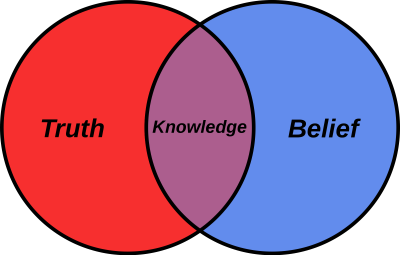
…Of course, some will argue that the term, “truth” – as in fact-based knowledge – applies to faith as well, by claiming Biblical or other religious information as established fact. But if we’re being totally honest with ourselves, we’d realize this view depends on semantics:
For example, Biblical literalists might say it’s true – a fact – the Bible says the Universe is about 6000 years old. While this may be arguably a fact of the Bible, the actual age of the Universe is not 6000 years old (according to virtually all scientists).
This is illustrated by employing the two-circles model for faith-based knowledge: One circle would represent faith-based Belief and the other, expected, hoped-for Truth. The circles would not overlap because this is where the phrase, “leap of faith” is applicable.

The Bible even defines faith in line with this two-circles model: Hebrews 11:1 (KJV): “Now faith is the substance of things hoped for, the evidence of things not seen.”
Knowledge based on faith may or may not be true. We’re going to have to live with this uncertainty. It is a reality all religious beliefs share – from Christianity to Judaism to Islam to Hinduism to Buddhism to the (approximately) 4,200 other active religions in the world today.
Belief and Truth: An Important Distinction
“The human brain is a complex organ with the wonderful power of enabling man to find reasons for continuing to believe whatever it is that he wants to believe.” – Voltaire
It’s important to acknowledge the difference between belief and truth. They can be the same thing, of course: What you believe can be true. And none of us would intentionally believe anything we thought untrue, right?
“…it is wrong always, everywhere, and for anyone, to believe anything upon insufficient evidence. If a man, holding a belief which he was taught in childhood or persuaded of afterwards, keeps down and pushes away any doubts which arise about it in his mind, purposely avoids the reading of books and the company of men that call into question or discuss it, and regards as impious those questions which cannot easily be asked without disturbing it—the life of that man is one long sin against mankind.” – W K Clifford (1877)
(The above quote applies to people who, like myself when I was younger, profess to believe in God largely for a “better safe than sorry” or ‘wishful thinking’ reasoning.)
But with religion, you cannot know if what you believe is true, until you die. And even then — depending on what is actually true — you may not ever know, because you could simply be dead, for example. Not what I believe, but hey, I can’t make something true by merely believing it. And wishful thinking can’t make things true.
…I can say I know. In my mind I may sincerely believe I know. Yet in reality, I could never truly know. But that’s why all religions are faith-based, right? After all, they could not be fact-based, because then they would not be “they” (plural); there would be only one!
There would be no disagreements about a religion based on established facts anymore than there are disagreements today about whether or not the Earth is spherical. (Except for the Flat Earth Society. 🙂).
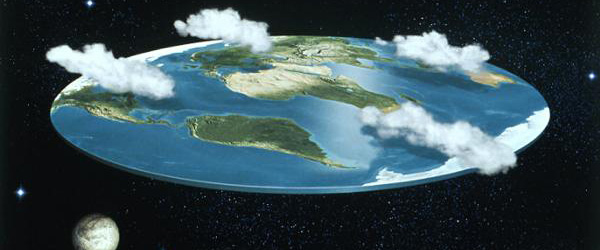
If I tell you the Earth is flat, you’ll know I am wrong, no question. I could even attempt to insult you — call you an idiot for believing the Earth is spherical. But my slings and arrows would not even bother you, because you would be confident in your knowledge. You might even feel sorry for me, but you’d likely be amused.
…Your sense of ‘righteousness’ would remain undamaged, no chinks in your armor. After all, your “armor” is fact-based knowledge. You are secure in your knowledge because you were ‘reasoned in’ to it. The only way I could get you to change your mind is by ‘reasoning you out’ of your knowledge of the true geometry of Earth.*
*Likewise, people cannot be reasoned out of something they were never reasoned in to! This insight is often overlooked. For example, ‘militant’ atheists, who waste their time and effort trying to reason the religious out of believing in God.
If I tell you there’s no such thing as God, that your so-called belief is nothing but wishful-thinking, and that it’s all part of your self-centered attempt to hit the jackpot at the end of your life, you’ll likely feel offended. You might feel obligated to defend your very faith, which has just been called into question.
…You may even get emotional — get angry — at me. Moreover, since all religions are, in fact, faith-based, pretty much anyone’s beliefs and opinions are as good as anyone else’s. This tends to drive people nuts, and is the base reason for the continuum of religious conflict throughout history, to include religious persecution, genocide, and war.
Since there is no fact-based religion everyone can point to as the fundamental truth, it comes down to a ‘shouting match,’ so-to-speak: “Our religion is the true and right one because our Holy Book says so!” (And may the strongest man/group/country win!)
If the existence of God was based on a universally-accepted, undeniable reality — similar to the existence of our spherical Earth — there wouldn’t be this continuum of atheistic versus theistic arguments by the brightest minds in the world, stretching back centuries.
So, faith-based knowledge has been demonstrated to be more fragile than fact-based knowledge, and thus easier to poke holes in. This is why questioning a person’s faith tends to annoy him or her. On a global scale, this ‘annoyance’ can escalate to war.
Religious Belief – Like All Beliefs – Is A Choice
In all of history, never would the first drop of blood have been spilled in the name of a God or gods, if there was one undeniable truth (and resulting) fact-based religion.
 Instead, all we have are our chosen religion’s Holy Book with which to make sense of our God(s) and our religion. And as you know, there are myriad ways in which they can be interpreted.
…This is the main source of disagreement within each religion and is why there are various branches and denominations in Christianity.
Besides its Holy Book, every religion has its own prophets. We’re asked to believe everything they say without question. And like our prophets, we connect with our God through dreams, meditative prayer, and visions.
Each religion claims authenticity; each prophet and each believer testifies to be in direct communication with a God or, at minimum, to be Divinely inspired.
…Obviously they can’t all be right. This can mean only one of 3 things:
- Only one religion is legitimate. If so, which one? Yours, of course ;-).
- No religion is legitimate.
- Some are closer to the truth than others, but none are perfect.
IMO most people will probably say the third belief option is true. I say “belief option” because it’s important to acknowledge that belief is a choice, in the same way that we choose to love…
Because in the absence of empirical evidence (definitive proof), we are free to believe what we want — at least since the 18th century — before which time some people were burned or hanged for their religious (or atheistic) freedoms.
Examples of Beliefs Not Lining Up With Truth (Reality)
And even in the presence of definitive proof we are free to believe whatever we want. For example, although it’s an established fact that astronauts have landed on the Moon, some people believe the Moon landings were staged. This is fine, unless these moon landing conspiracy theorists cite their own facts. This is where they would ‘cross the line,’ because we know what is actually true, and nobody is entitled to their own facts.
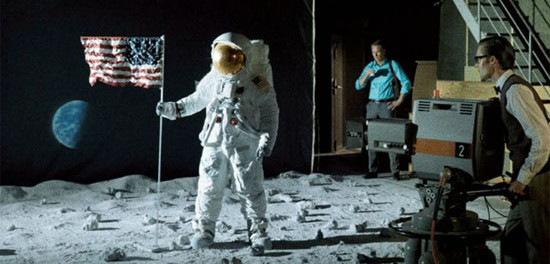
…Nevertheless, we don’t feel anger or hatred towards these folks. We’re mostly amused, because we recognize fact-based knowledge that they do not.
The existence of The Flat Earth Society makes you shake your head in disbelief. It’s nuts, but there are people who actually believe the Earth (and presumably all other planets) is/are flat. (Some are likely members just to have fun with the whole idea as an attention-getting ploy — such as when someone wears a crazy outfit or dyes their hair pink — anything to be different.)
…The bona fide ‘Flat Earthers,’ however, choose to believe the Earth is flat despite fact-based information to the contrary. Just like people choose to believe doomsday prophecies despite a dearth of factual information to support their beliefs.
Doomsday Prophesies
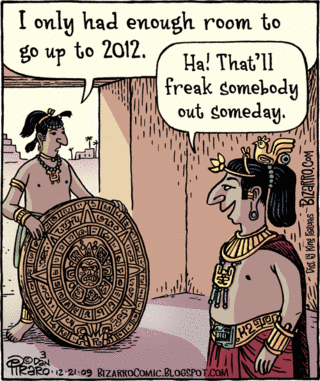
I’ll never forget the confident assertions of otherwise intelligent people — my 20 years-young daughter amongst them — who warned of the 12th (or was it the 21st?) December 2012 impending Armageddon supposedly predicted by the Mayan calendar. She was caught up in the misguided but otherwise innocent excitement that comes with global mania fueled by blind faith in erroneous information.
…It was genuinely similar to some religious claims in this respect.
Every few years or so (it seems) throughout history, there’s someone who offers “evidence” of global impending doom. In each instance, scores of credulous people jump on the doomsday bandwagon, and the prophecy gains momentum…
Inevitably, the doomsday comes and goes with little fanfare, its proponents quietly disappearing into anonymity, the mass of believers silenced.
Oh well, no matter. There’s always the next, ‘more believable’ doomsday prophecy. And with a high degree of certainty, it too, will prove to be false.
You may have your own examples — personal or otherwise — of beliefs not lining up with truth (reality). The bottom line is that faith-based belief, like opinion, is a choice – no matter what the true reality is.
There Are, Evidently, Levels or Strengths of Beliefs
The level (or strength) of a belief is based on the consequences associated with that belief. A belief based on fact-based knowledge is strong; beliefs based on faith-based knowledge — not so strong.
Examples:
Strong beliefs, serious consequences
- You believe stepping in front of a moving car or train will kill you, so you do not ever do so — ever; the consequence will be death. Your belief is based on your fact-based knowledge of the laws of physics as they apply to heavy moving objects and so forth.
- You believe your teenage child would be unsafe riding in a car with his friends to a party, so you drive him yourself. It turns out that car did crash, injuring or killing some teens. Your fact-based belief about the dangers of inexperienced, testosterone-fueled drivers had serious consequences, so you acted on it.
Strong belief, trivial consequences
- You believe it will rain because it’s forecast to rain and your experience with the science of meteorology tells you the weather forecast is often correct. But you forget your umbrella. No problem, getting wet will not kill you. You have strong, fact-based knowledge of the weather, but you know the consequences of failing to follow through on this fact-based knowledge is merely an inconvenience.
Weak belief, serious consequences
- You’re not sure what to believe about the threat of a virus. Some of what you hear sounds like hearsay. You also hear about problems with vaccinations, so you elect to skip vaccination. This turns out to be a bad decision because you contract the viral disease and become very sick.
Weak beliefs, trivial consequences
- You ‘sort of’ believe in astrology. You smartly don’t commit full, strong belief in astrology, due to the lack of scientific evidence for its ability to accurately predict specific events. (Astrology survives due to its ‘broad-brush stroke’ predictions, which can be applied to nearly anyone at any time.)
- You publicly profess faith in God and the Bible, yet even with eternal torture (or, at minimum, ‘damnation’) on the line, you nevertheless buy things you don’t need instead of using the money to help the truly needy; you make sure your wants are addressed before addressing the needs of others. After all, there’s always forgiveness, and maybe feeling guilty counts for something. Besides, ‘God knows what’s in your heart.’ All of this makes the otherwise serious consequences become trivial — not to be taken seriously.*
*This paragraph might describe over 99% of mainstream “Christians.”
Actions Speak Louder Than Words: Weak Beliefs Masquerading As Religious Faith
In practice — for the large majority of people — religious faith appears to fall under the “Weak Beliefs, Trivial Consequences” belief model. This just underscores our earlier observations that faith-based belief is demonstrably weaker than fact-based belief.
…This is why many people do not “practice what they preach” when it comes to their religious faiths.
We Might Believe More Science if it did not Insult Our Egos
We’ve established that belief (and faith) is a choice whether it lines up with reality or not. Refusing to believe something is also a choice, whether that “something” is true or not.
Science can be impersonal. Science follows the evidence and sees where it leads. Scientists are, for the most part, completely inconsiderate of our feelings. They willingly expose any and all previously-accepted discoveries and theories to the indignity of newer, better evidence.
Mainly starting with the “Copernican Revolution” (when science established that the Earth was NOT the center of the Solar System/Universe), the literal interpretation of the Bible has been disputed. The obvious solution to this dilemma would be to NOT interpret the Bible literally.
Alas, people love to complicate things. But probably the biggest reason some folks are reluctant to accept certain science claims has nothing to do with the plausibility of the evidence. No, it’s all due to simply being human:
Ego.
When our sense of importance is threatened and our feeling of a privileged status in the Universe is called into question, our first reaction is disbelief – with no good scientific reason for our disbelief.
Evolution (a.k.a. “Darwinian Evolution”)
“The question of whether there exists a Creator and Ruler of the Universe has been answered in the affirmative by some of the highest intellects that have ever existed.” – Charles Darwin, from his book, “Descent of Man.”
Evolution is especially hard to swallow. We all remember the first time we saw that Darwin-inspired drawing of an ape gradually walking more upright until he ‘morphed’ into the “modern man.” Personally, I was appalled at the whole idea.
…But my repulsion was all about my ego: “Oh c’mon!” I thought. “I don’t know about YOUR family, but MINE did not come from no apes!” The last thing I was thinking about was science.
Later, however, as I read books and learned from people more educated than myself, I gradually came to realize that evolution is not really a “theory” so much as a fact. After all, we humans are mammals ourselves.
But even now, I cannot say I’m a “mammal” without hesitation. For one thing, it sounds too much like “animal.” A bit of the same repulsion I had when looking at the Darwin drawing comes back.
“We humans have a tendency to see ourselves as completely different from other animals, and the way in which large segments of the public continue to reject the theory of evolution is just one symptom of that malaise.” – Kenneth R. Miller
Well-meaning Christian Fundamentalists (and many other good folks) may deny evolution, but their denials are not based on established, proven science. The hard evidence for evolution, however, continues to mount, especially lately with discoveries in genetics.
…Evolutionary Biology is now an entire branch of biology. BBC Earth did a great job (IMO) putting together a website that explains the science behind evolution in an interesting and easy-to-understand way for us non-scientists.
“Whether conservative or liberal, fundamentalist or agnostic, the more students learn of biology, the more they accept evolution.” – Kenneth R. Miller
“Another source of conviction in the existence of God, connected with the reason and not with the feelings, impresses me as having much more weight. This follows from the extreme difficulty or rather impossibility of conceiving this immense and wonderful universe, including man with his capacity of looking far backwards and far into futurity, as the result of blind chance or necessity. When thus reflecting I feel compelled to look to a First Cause having an intelligent mind in some degree analogous to that of man; and I deserve to be called a Theist. – Charles Darwin, as quoted in his autobiography.
Religious Acceptance of Evolution (and Science in General)
As of the 21st century, more of the world’s Abrahamic religions (Judaism, Christianity, Islam) are accepting evolution, which includes cosmological as well as biological evolution. (After all, you can’t have one without the other.)
If there is one official position the Abrahamic religions have on human biological evolution, it’s that God plugs a soul into each human body at some point. When this happens is not clear — the stance is just that it happens.
The Vatican
The Vatican started (reluctantly) in 1950 to accept Darwinian evolution. In 1996, in a letter to bishops, Pope John Paul II came out strongly for Darwin’s theory, calling evolution “more than a hypothesis.”
“Today, the Church supports theistic evolution, also known as evolutionary creation. Under Cardinal Joseph Ratzinger, the International Theological Commission published a paper accepting the big bang of 15 billion years ago and the evolution of all life including humans from the microorganisms that formed approximately 4 billion years ago.” – From this page on Wikipedia – Acceptance of Evolution by the Religious.
Judaism
“Today, many Jews accept the theory of evolution and do not see it as incompatible with traditional Judaism, reflecting the emphasis of prominent rabbis such as the Vilna Gaon and Maimonides on the ethical rather than factual significance of scripture. The Conservative Jewish movement has not yet developed one official response to the subject, but a broad array of views has converged. Conservative Jews teach that God created the universe and is responsible for the creation of life within it, but proclaims no mandatory teachings about how this occurs.” – From this page on Wikipedia – Jewish views on evolution.
Muslim Society
“Evolutionary biology is included in the high-school curricula of most Muslim countries. Science foundations of 14 Muslim countries, including Pakistan, Iran, Turkey, Indonesia, and Egypt, recently signed a statement by the Interacademy Panel (IAP, a global network of science academies), in support of the teaching of evolution, including human evolution.” – From this page on Wikipedia – Islamic views on evolution.
UPDATE:
“In 2014, when the Islamist extremist rebel group Islamic State of Iraq and the Levant captured the Iraqi city of Mosul, the group issued a new set of rules for the schools there, which included a ban on the teaching of evolution.” – (from same page as above on Wikipedia)
United States
The United States has been the last to accept Darwinian evolution and the age of the Universe. Perhaps this isn’t surprising, given that in 2012 the U.S. ranked 24th out of 36 major countries in science competency.
Judging by our superior military, you’d think we’d be #1 in math and science, but we’ve actually maintained a below-average aptitude in math and science for many years. In fact, guess where we ranked in mathematics in 2012 compared to the other 35 major countries?
Answer: Dead last — #36.*
This stat may seem a bit insulting at first glance, but take heart: The U.S. is #1 in not only military power, but also in the entertainment industry, gridiron football, basketball, baseball, and (occasionally) hockey! 😉
*From this page of the Business Insider – PISA (Program for International Student Assessment).
A Few Notable and Pertinent Quotes
You may have noticed that I am fond of Albert Einstein’s views on science and mankind’s place in the big scheme of things.
…There is another person – this one alive and active in academia in 2019 who personifies much of what Einstein was about: Good science, clear thinking, and a unique ability to put things into a balanced, commonsense perspective based on fact-based knowledge. But this particular scientist is one of few who manage to successfully reconcile science and religion. (Another is John Polkinghorn.)
Kenneth Raymond Miller is an American cell biologist and molecular biologist who is currently Professor of Biology and Royce Family Professor for Teaching Excellence at Brown University. Miller is noted as a co-author of a major introductory college and high school biology textbook published by Prentice Hall since 1990. He is Roman Catholic and particularly known for his opposition to Creationism, including the Intelligent Design movement. He has written two books on the subject: “Finding Darwin’s God,” which argues that acceptance of evolution is compatible with a belief in God.

Kenneth Miller speaks and writes with the confidence of someone who is not only very well educated, but who has attained a vision of the relationship of biology to mankind’s place on Earth – and in the Universe as a whole – that is unique in its clarity. He has a passion for down-to-earth truths and communicates with the wisdom that can come only from a balanced view encompassing proven science, religion, and philosophy.
(Most of the following Kenneth R. Miller quotes were copied from this page on brainyquote.com.)
“Evolution isn’t just a story about where we came from. It’s an epic at the center of life itself. Far from robbing our lives of meaning, it instills an appreciation for the beautiful, enduring, and ultimately triumphant fabric of life that covers our planet. Understanding that doesn’t demean human life – it enhances it.” – Kenneth R. Miller
“Like many other scientists who hold the Catholic faith, I see the Creator’s plan and purpose fulfilled in our universe. I see a planet bursting with evolutionary possibilities, a continuing creation in which the Divine providence is manifest in every living thing. I see a science that tells us there is indeed a design to life.” – Kenneth R. Miller
“What evolution tells us is that we are part of a grand, dynamic, and ever-changing fabric of life that covers our planet. Even to a person of faith, in fact especially to a person of faith, an understanding of the evolutionary process should only deepen their appreciation of the scope and wisdom of the Creator’s work.” – Kenneth R. Miller
“Biology is far from understanding exactly how a single cell develops into a baby, but research suggests that human development can ultimately be explained in terms of biochemistry and molecular biology. Most scientists would make a similar statement about evolution.” – Kenneth R. Miller
“Our own genomes carry the story of evolution, written in DNA, the language of molecular genetics, and the narrative is unmistakable.” – Kenneth R. Miller
The Big Bang, Age of the Universe, and Evolution are All Necessarily Tied Together
From the standpoint of Christian spirituality, does it really matter if humans evolved slowly — over millions or billions of years — or were placed here all at once, descending from just one man and one woman?*
*According to a 2009 Pew Research Poll, 22% of non-scientists believe God guided evolution. Only 8% of scientists in the same poll agree, and only 2% of scientists believe in Creationism.
If you’re in the camp of Creationists, the exact mechanics of how a Creator went about creating the Universe and everything in it (including us, of course) should not be a problem. But we choose to make it a problem, because of our egos.
The easy and obvious way around these seeming conundrums is to take the “Big Picture” view of the Bible; some Biblical stories as allegorical, with metaphors used to help illustrate particular points. The precise science details of Creation can be a problem only for our egos.
Regardless, whether you think the evidence supports evolution or not, or whether the Universe is 6000 years old or 6000 million years old, one thing’s for sure…
Science Continues to Grow
“Any suggestion that science and religion are incompatible flies in the face of history, logic, and common sense.” – Kenneth R. Miller
Religious texts (to include the entire history of religion) are already ‘written in stone’; nothing significant remains to be discovered.
Science, on the other hand, is just getting started. Especially since the advent of the internet, there has been an unprecedented explosion in shared knowledge — scientific or not.
A relentless ‘overturning each and every rock to see what’s under them’ spirit of discovery has permeated our daily lives.
One significant (and indispensable) part of gathering new, trustworthy knowledge — that hasn’t changed since the dawn of the Information Age — is the scientific method. Its built-in error-correcting ‘machinery’ provides an unambiguous and open-source path towards fundamental truths.
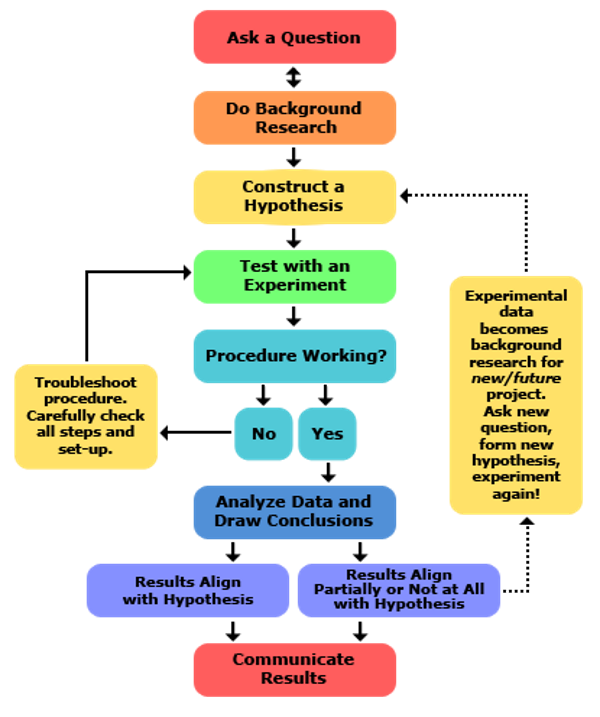
…If a new theory does not gain acceptance from independently-run experiments done by other scientists worldwide — or does not agree with observation — it is discarded. As a result, there are ongoing paradigm shifts in established thought, better ways of looking at things.
Truly, the scientific method’s very existence is proof positive that how to think is every bit as important — perhaps even more so — than what to think.
The entire sphere of science is built on encouraging us to never stop questioning because that’s how we learn.
“Even if I stumble on to the absolute truth of any aspect of the universe, I will not realise my luck and instead will spend my life trying to find flaws in this understanding — such is the role of a scientist.” – Brian Schmidt, Astrophysicist and Nobel Prize winner
…Questioning religious doctrines, however, is not only discouraged, but there can be harsh penalties for doing so. (‘Don’t question, just believe.’ See “A Nine-year-old Skeptic’s Search for God” for more on this.)
“I would rather have questions that can’t be answered than answers that can’t be questioned.” – Richard Feynman
Daunting ‘Fire Hose Spray’ of Information
The interconnectivity of the internet with it’s ‘instant information’ has ushered in an era of learning and education at an ever-increasing rate that doesn’t show any sign of slowing down, and it’s just getting started. As a species, how we handle our new accelerated information-gathering ability and the ground-breaking discoveries that stem from it, is another subject entirely.
If we refuse to embrace science while clinging to a more fundamental religious perspective, we’ll have an uphill battle to keep religion and science in the right perspective. A severely lopsided perspective will result, as one gains momentum while the other remains fixed.
As time marches on, so will the relentless continuum of well-documented scientific discoveries. It is possible some of these discoveries will directly or indirectly contradict the literal interpretations of the Bible and other religions’ Holy Books.
…Mounting evidence will be increasingly difficult to ignore, which might force religious Fundamentalists to either revise certain religious beliefs or to drop them altogether.
Ignoring science discoveries that disagree with dogmatic religious beliefs will relegate Fundamentalists to a dwindling population of stubborn hold-outs, like the Flat Earth Society. (There’s even a Facebook page for “flat-earthers.”)
In any case, science provides a strong case supporting religion anyway (which we’ll look at in more detail soon). For now, let’s check out some of…
The Limits (and Dark Side) of Science
Young, ambitious scientists in all disciplines to include medicine, biology, astrophysics, engineering, and so on — are working tirelessly night and day to advance our knowledge, mostly for the betterment of humankind.

These bright-eyed, energetic and mostly idealistic professionals are some of the best and brightest this world has to offer. And to a large extent, they’re successful. They will, however, not ever discover everything.
For example, physicists worldwide admit that little is known about most of the universe. The terms “dark energy” and “dark matter” are nothing but placeholder terms for a combined total of 95.1% of the universe, for which physicists have only woefully incomplete theories. “That’s a lot to sweep under the rug.” says neuroscientist David Eagleman.
Not only that, but even well-documented and promising research areas are limited to how non-scientists choose to use them. Science helps us describe how the world is, and then we have to decide how to use that knowledge.
The following bullet points are rewritten from a Berkeley Science Department article:
- Science doesn’t tell you how to use scientific knowledge
Although scientists often care deeply about how their discoveries are used, science itself doesn’t indicate what should be done with scientific knowledge. Science, for example, can tell you how to recombine DNA in new ways, but it doesn’t specify whether you should use that knowledge to correct a genetic disease or develop a bruise-resistant apple. For almost any important scientific advance, one can imagine both positive and negative ways that knowledge could be used.
- Science doesn’t make aesthetic judgments
Science can reveal the frequency of a G-flat and how our eyes relay information about color to our brains, but science cannot tell us whether a Beethoven symphony or a Picasso painting is beautiful or dreadful.
- Science doesn’t make moral judgments
When is euthanasia the right thing to do? What universal rights should humans have? Should other animals have rights? Questions like these are important, but scientific research will not answer them. Science can help us learn about terminal illnesses and the history of human and animal rights — and that knowledge can inform our opinions and decisions. But ultimately, individual people must make moral judgments. This is an area that religion can help.
- Science doesn’t draw conclusions about supernatural explanations
Does God exist? If God exists, does He intervene in human affairs? These questions may be important, but science won’t help you answer them. Questions that deal with supernatural explanations are, by definition, beyond the realm of nature — and hence, also beyond the realm of what can be studied by science.*
*Nevertheless we can use science to support our religious faith: Our experiences here on Earth as sentient, conscious beings begs an explanation. One explanation is that our existence is the result of a God’s Creation, made possible by a set of partially-understood laws of physics (which were also, of course, created by God as His Creation Tools).
The Dark Side of Science
- Nuclear (fission) power and the accidents resulting from its use (Three Mile Island, Chernobyl, Fukushima).
- Nuclear bombs (Hiroshima and Nagasaki).
- Harmful chemicals (whether knowingly or unknowingly produced).
- Medical waste
This is just a partial list. The resulting global pollution wrought by all these things is continuing to pollute our groundwater, oceans, and atmosphere.
Some may argue these things are the inevitable result of “progress.” But one has to step back and ask if some advances in science were really advances at all, or the beginning of the end for mankind.
Nevertheless…
Overall, Science Has (So Far) Improved Our Lives
Thus far, the positive effects of science have far outweighed the negative effects. In the relatively short time since 1700, lifespans have more than doubled. Many debilitating diseases have been all but eradicated through vaccinations, such as:
- Smallpox
- Polio
- Hepatitis A & B
- Measles
- Mumps
- Pertussis
- Rubella
- Tetanus
- …and many others.
- Epidemics are nearly a thing of the past – even considering the over-prescribing of antibiotics.
- Cancer detection and treatment has been dramatically improved.
- More people are able to keep their real teeth their whole lives – even centenarians.
- Cars are safer but faster, same for airplanes. The result is the world is accessible to many more people.
- Air pollution — once a reason to avoid cities like Los Angeles — has been drastically reduced through automotive and other technologies.
- Entertainment — there are more choices today (beyond television programming).
…Obviously, this list barely scratches the surface. Science continues to improve the quality and length of our lives.
The Laws of Physics: An Order To The Universe
“If we need an atheist for a debate, we go to the philosophy department. The physics department isn’t much use.”
– Robert Griffiths, professor of quantum physics at Carnegie Mellon University and winner of the Heinemann Prize in mathematical physics.
“The temptation to believe that the Universe is the product of some sort of design, a manifestation of subtle aesthetic and mathematical judgment, is overwhelming. The belief that there is “something behind it all” is one that I personally share with, I suspect, a majority of physicists.” – Paul Davies, theoretical physicist, cosmologist, astrobiologist and best-selling author.
What is science? You could say it’s a systematic method of amassing and organizing knowledge in the form of testable explanations and predictions about the Universe.
As such, science is not something we “believe” or not; it just is. Either the evidence adequately supports the existence or explanation of something or it doesn’t; we really have no choice in the matter as we do with religious beliefs.
 …For example, the statement, “I don’t believe in red bicycles” is nonsensical. It would make more sense for someone to say, “I think the evidence does not support the existence of red bicycles.”
…At that point someone could show the ‘red bicycle disbeliever’ a red bicycle. The burden of proof becomes evidence-based, not belief-based.
This is not to say that there is no evidence-based science associated with God and religion:
If a God truly exists and created the Universe, then evidently God created the laws of physics as the tools with which to do it. So it follows that since we’ve been able to decipher many of these immutable laws, the ones we haven’t should also be decipherable, even if we are never able to fully decipher the remaining ones for whatever reasons. (eg, the true nature of dark matter, dark energy, etc.)
…So there is no “magic” involved, but astoundingly ingenious science. In a sense, a God would be the Supreme Scientist of the Universe! In this view, there is no clash, no discrepancy — God would obviously be not only a ‘scientist’ but the best there could ever be.
In any case, science provides a key piece of hard evidence that is HUGE in our effort at reconciling science and religion. The reason this is significant is because this is something we have empirical (or fact-based) knowledge about: The laws of physics.
…But the significance of this is NOT about what the laws themselves are, or whether we’ve gotten them just right or not, or whether we’ll ever figure all of them out.
The significance is that there is, evidently, an order to the Universe. An order that — at first look — seems to be ‘manually’ tuned. But regardless if our Universe was created from scratch by a God or if it was formed as a result of natural cosmic evolution, if any one of dozens of parameters were different by a minuscule percentage, life would not be possible.
We can imagine a separate spiritual dimension, if we like, to accommodate a heaven, for example. But the bottom line is that the physical ‘world’ and spiritual ‘world’ (if it exists) would be necessarily and inexorably intertwined — being parts of the same Universe. Might as well let them play together. Wrapping our minds around this concept in a way we can not only accept — but more importantly understand — is key to reconciling science and religion.
There are prominent scientists who are also prominent theologians, like John Polkinghorn, (who is also an Anglican priest). John addresses every supposed contradiction of religion and science with the confidence that only someone who truly knows both sides of the issue can.
But you don’t have to be a scientist or a priest to appreciate…
The Astounding “Fine-Tuning” of Our Universe
The so-called “fine-tuning” of our Universe is probably the most compelling scientific evidence for the existence of a Creator God (“Intelligent Design Argument” or “Teleological Argument”). To fully appreciate this does not require knowledge of physics or deep math, but a quick and easy tutorial may help…
Step 1 – Appreciating exponents:
10^37 is a “1” followed by thirty-seven zeros:
10^37 = 10,000,000,000,000,000,000,000,000,000,000,000,000
Step 2 – Appreciating ratios:
1:10^37 is a ratio meaning 1 (one) part in 10^37.
Step 3 – Putting them together:
Now, let’s look at the first line in the list of ratios below (colored all red):
*Ratio of electrons to protons – 1:10^37
Ratio of electromagnetic force to gravity – 1:10^40
Expansion rate of the universe – 1:10^55
Mass density of the universe – 1:10^59
Cosmological constant – 1:10^120
(Info courtesy this page on godandscience.org.):
(FYI: You may remember from grade school that all normal matter in the Universe is made of atoms or parts of atoms. An atom is composed of electrons ‘orbiting’ a nucleus made of protons and neutrons.)
*If the ratio of the numbers of electrons to the numbers of protons in the Universe varied by more than one electron per…
10,000,000,000,000,000,000,000,000,000,000,000,000 protons, we would not be here to appreciate this ratio!
And this ratio is the smallest (or biggest, depending on how you look at it) one in the list!
These ratios are just five of more incredibly fine-tuned ratios that physicists the world over agree must be finely-balanced for us to be here.
Dr. Hugh Ross gives an example of how to imagine this ratio of electrons to protons in his book, “The Creator and the Cosmos:”
- Cover the entire North American continent in dimes all the way up to the moon, a height of about 239,000 miles. (In comparison, the money to pay for the U.S. federal government debt would cover one square mile, less than two feet deep with dimes.)
– - Next, pile dimes from here to the moon on a billion other continents the same size as North America.
– - Paint one dime red and mix it into the billions of piles of dimes. Blindfold a friend and ask him to pick out one dime. The odds that he will pick the red dime are one in 10^37.
(Rewritten from page 115 of “The Creator and the Cosmos.”)
The relentless march of science towards our future has resulted in exactly what science is supposed to do (other than make our lives better):
Provide a better understanding of where we came from and where we’re going.
“Who are we? The answer to this question is not only one of the tasks, but the task of science.” – Erwin Schrodinger, Nobel Prize – winning physicist
It is precisely because of recent discoveries in physics that the fine-tuning of the Universe has taken center stage, when it comes to reconciling science and religion.
The Intelligent Design Argument Gets a HUGE Boost
The “Argument from Design,” a.k.a. the “Teleological Argument,” a.k.a. “Intelligent Design Argument” has enjoyed a resurgence in popularity, and for this compelling reason:
How can any reasonable-thinking person accept that our Universe came to be without a Creator to ‘tweak’ such unbelievably-unlikely ratios of natural laws?
Well, leave it to science to look into all possibilities, even ‘theories’ that attempt to debunk or explain away established ones…
The Multiverse Theory
(As an attempted ‘natural’ explanation for the Universe’s fine-tuning.)
Proponents of the multiverse theory hold that ours is but one of an infinite number of Universes that have been (and are currently being) ‘bubbled up’ somewhere in spacetime.*
*The Multiverse Theory is not really a theory by itself, but a natural offshoot of Inflationary Cosmology – started in the ‘80s, thanks in large part to Alan Guth. It has garnered lots of support but also lots of critics in the physics community.
If you assume this is true, a logical deduction can be made about our Universe:
With an infinite number of ‘tries’ (Big Bangs), it’s not surprising a Universe like our own would eventually “bubble up” (‘Bang’) with all of our seemingly fine-tuned ratios for intelligent life.
…So, in this scenario it would be unremarkable that we find ourselves in our Universe with these finely-tuned ratios because otherwise, we wouldn’t be here to marvel over them. (This is the Anthropic Principle.)
Problems With the Multiverse Theory
The problem with the “multiverse theory” is it cannot be tested or proven — even in principle. The following two quotes by two highly-respected scientists in the physics community explains the situation nicely. (Reprinted from this page in Wikipedia.)
“As skeptical as I am, I think the contemplation of the multiverse is an excellent opportunity to reflect on the nature of science and on the ultimate nature of existence: Why we are here….In looking at this concept, we need an open mind, though not too open. It is a delicate path to tread. Parallel universes may or may not exist; the case is unproved. We are going to have to live with that uncertainty. Nothing is wrong with scientifically-based philosophical speculation, which is what multiverse proposals are. But we should name it for what it is.” — George Ellis, Scientific American, “Does the Multiverse Really Exist?”
The last sentence in George Ellis’s above quote means he thinks the word “theory” should be dropped and the name be changed to something like, “the Multiverse Philosophical Idea.”*
*At home, we use the term, “theory” loosely to describe any idea we might have. Science, however, treats the word completely differently. To qualify as a bona fide theory requires repeated testing and confirmation from observation and/or experimentation through a very specific sequence called the scientific method.
Author and cosmologist Paul Davies offered a variety of arguments that multiverse theories are non-scientific. The below quote is from his 2003 New York Times opinion piece, “A Brief History of the Multiverse”:
“For a start, how is the existence of the other universes to be tested? To be sure, all cosmologists accept that there are some regions of the universe that lie beyond the reach of our telescopes, but somewhere on the slippery slope between that and the idea that there are an infinite number of universes, credibility reaches a limit. As one slips down that slope, more and more must be accepted on faith, and less and less is open to scientific verification. Extreme multiverse explanations are therefore reminiscent of theological discussions. Indeed, invoking an infinity of unseen universes to explain the unusual features of the one we do see is just as ad hoc as invoking an unseen Creator. The multiverse theory may be dressed up in scientific language, but in essence it requires the same leap of faith.” – Paul Davies
What If The So-Called “Fine-Tuning” Is Merely An Illusion?
What if we’re seeing “fine-tuning” where none really exists? One simple explanation for the seemingly astounding ratios of particles necessary for life goes as follows:
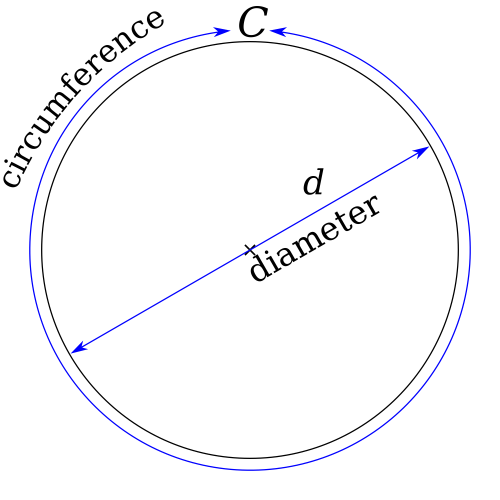 The ratio of the circumference of a circle to its diameter is represented by the symbol “π” or mathematically by 3.14159265359…. continuing on, non-repeating indefinitely. You were introduced to this in early grade school, yet its existence has profound implications for the so-called “fine-tuning” of our Universe:
Along with many other “constants” (“irrational numbers”) common in nature, π could be thought of as an extraordinarily fine-tuned ratio, yet it could not be any other way. A circle is obviously a common and natural shape — a necessary occurrence in nature (the Universe).
…So perhaps the “fine-tuning” was not ‘manually’ tweaked by a Creator; the numbers (“constants”) — as improbably coincidental as they may seem at first look — could not be anything other than what they are. This view might imply there’s a limit to fundamental philosophical conclusions about the Universe we can derive from mathematics alone.
Truth is Stranger and Far More Wonderful Than Fiction
“The difference between fiction and reality is that fiction has to make sense.” – Tom Clancy, author
The precise details of how the Universe came to be/was created is what science is all about. I’m convinced the more we learn about these finer details, the more filled with awe and wonder we will be. Reconciling science and religion allows us to develop a deeper appreciation for our opportunity to be here to ponder our existence.
The pursuit of fundamental truths about the nature of reality (which is what science is) should be considered at least as noble a pursuit as worshiping a Creator of that nature, right? (There would be nothing intelligent about an intelligent Designer ‘who’ expected otherwise.)
The following quote by Albert Einstein is part of a longer statement he made about discoveries in science. If you read quickly through it, you may get the impression he’s rambling. But if you read it slowly and digest every word, you’ll see it’s a finely-crafted quote that says much:
“…But whoever has undergone the intense experience of successful advances made in this domain, is moved by the profound reverence for the rationality made manifest in existence. By way of the understanding he achieves a far reaching emancipation from the shackles of personal hopes and desires, and thereby attains that humble attitude of mind toward the grandeur of reason, incarnate in existence, and which, in its profoundest depths, is inaccessible to man. This attitude, however, appears to me to be religious in the highest sense of the word. And so it seems to me that science not only purifies the religious impulse of the dross of its anthropomorphism but also contributes to a religious spiritualisation of our understanding of life.”
Many people agree with Wayne Dyer:
“We are not human beings having a spiritual experience, but spiritual beings having a human experience.” – Wayne Dyer
This quote by Brian Greene is one of my favorites:
“The universe is incredibly wondrous, incredibly beautiful, and it fills me with a sense that there is some underlying explanation that we have yet to fully understand. If someone wants to place the word God on those collections of words, it’s OK with me.” – Best selling author, physicist and string theorist Brian Greene