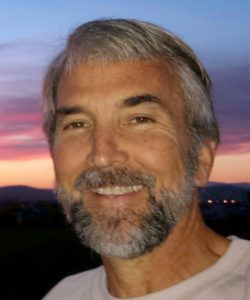
Perhaps like yourself, I’ve always had a deep appreciation for just being here. Some of my favorite conversations are ones where I connect with someone who is similarly enthusiastic about their opportunity to marvel at our place in the Universe, and how it all came to be. Since this book is about ‘weighty’ topics, I’ll just go ahead and make another profound statement right here:
We are all part of a Universe which has, apparently, become self-aware. If you can’t find something about this to be enthusiastic about, I think you’re missing what is surely a big point of it all.
The search and investigation into how the Universe came to be – including all life – is what science is all about. That’s why it is often said, “Truth is stranger than fiction.” But I would add, “Truth is stranger and far more fascinating than fiction.”
My wife, Lise, shares my sense of wonder and appreciation – although hers is more from a standpoint of Christian spirituality. But we pretty much see things with the same ‘big picture’ view. We’re very close and enjoy the great outdoors together.
Some of the inspiration for this book comes from the following authors, listed in no particular order. Even though their books were written for the non-scientist public, I nevertheless found it necessary to re-read several of them. (I’m certainly no genius, but enjoy learning from those who are.) 😉
Carl Sagan
Neil DeGrasse Tyson
Lawrence Krauss
Stephen Hawking
Lisa Randall
Brian Greene
Michio Kaku
Phil Plait
Paul Davies
Janna Levin
David Eagleman
Paul Halpern
Martin Rees
Ethan Siegel
Sean Carrol
Rodney A. Brooks
Daniel C. Dennett (philosopher)
Aside from Carl Sagan and Stephen Hawking, the scientists in the list are alive and active in academia as of 2019. But they all would be quick to point out they are standing on the shoulders of many other accomplished scientists who preceded them, such as Albert Einstein and Richard Feynman — to name merely two of dozens whose accomplishments date back to Isaac Newton and before.
The list represents a sampling of ‘modern day’ people who are not only accomplished scientists but effective communicators. The ability to communicate otherwise overly complex, baffling science to the lay person in an interesting and engaging way is unique in the professional science community, in my opinion.
Good communication skills are arguably the best attributes anyone can have (think marriages). It seems especially true in today’s world of so-called “fake news,” to say nothing of climate change deniers and the like. We need more people like Neil DeGrasse Tyson who can make science interesting, fun, and ‘cool,’ but perhaps most importantly, believable.
You might remember actor Alan Alda who played “Hawkeye” on the hit television series, “MASH,” which ran from 1972 thru 1983. Alan recognized this need and founded the “Alan Alda Center for Communicating Science” in 2009.
“Effective science communication happens when we listen and connect. It happens when we use empathy. Communication is headed for success when we pay more attention to what the other person is understanding rather than focusing solely on what we want to say.” – Alan Alda
Obviously science never sleeps; that is, information is rarely written in stone. Besides new discoveries, ‘old’ science — such as the theory of gravity — is continually being tweaked and updated as better information comes available. For this reason, printed books on science go out of date fairly quick and new ones need publishing…
This is where electronic books have an advantage over printed. Because even though some of the Biggest Questions of life are metaphysical in nature, they are nevertheless based on a real, live Universe. A Universe built on decipherable laws of physics — and there’s a lot more deciphering to be done!
Better information will not necessarily provide slam-dunk, concrete answers to all the Biggest Questions. It may, however, help you decide which answers appear more likely than others.