INTRODUCTION: Skepticism

We’ve all heard the phrase, “cold, hard facts.” By itself that phrase begs the question of why a given fact would be described as cold and hard. The answer, of course, is that a fact would only seem cold and hard contrasted with the more attractive fictional account of something.
We can’t change reality but we can change our attitudes towards reality. And in the final tally, truth is stranger (and more interesting) than fiction.
Starting about nine years old, I started to think like a skeptic, although the term was definitely not in my vocabulary. But this resulted in seeing things as they really are, rather than as people (usually grownups) wanted them to appear.
“Once you start asking questions, innocence is gone.” – Mary Astor (1906 -1987) American film actress best known for her role in “The Maltese Falcon.”
Perhaps I could be called a “realist.” One definition of a realist is “Someone who tends to view or represent things as they really are.”
I’m not a big fan of labels, but if pressed, I would call myself a skeptic. But there’s a big difference between skepticism and cynicism: A cynic expects the worst in people; a cynic expects all decisions and actions by people are selfishly motivated.
The skeptic, however, simply distrusts new information without corroborating evidence. The skeptic is not afraid of exposing any and all beliefs to the indignity of evidence and rational thinking.
…Perhaps that’s why you never hear, “healthy cynicism.”
Can a skeptic also be a cheerful, ‘glass half-full’ optimist at the same time? Absolutely: You can be an optimistic skeptic, just like you can be an optimistic person.
Labels
 We’re fond of labels. Religious labels allow us to assign pre-packaged belief systems to people. This has the benefit of not having to do any deep thinking, while simultaneously making us feel superior or more righteous.
Labels help us alienate our ‘better’ group from others, leading to demonizing other groups and, ultimately, wars. It’s a result of tribalism, a relic DNA evolutionary survival trait we humans (and all other primates) have in common.
Albert Einstein was once asked if he considered (labeled) himself a Pantheist. He responded:
“Your question is the most difficult in the world. It is not a question I can answer simply with yes or no. I am not an Atheist. I do not know if I can define myself as a Pantheist. The problem involved is too vast for our limited minds…”
(This quote was the beginning of a longer, very eloquent and famous Einstein quote which we’ll see later in its entirety.)
The Unpopular Label, “Neutralist”
Some familiar labels are “theist,” “atheist,” “agnostic,” and “fundamentalist.” But nobody’s heard of “neutralist” or “neutralism.” Likely because believers and non-believers are a straightforward bunch of folks to understand. Not so for folks on the fence: It seems both believers and non-believers tend to have a problem with those who are comfortable remaining undecided.*
*Why is this? Sometimes I hear, “If you don’t stand for something then you stand for nothing!” It’s as if neutrality is associated with weakness; an inability to commit to something. But nothing could be further from the truth:
Wouldn’t it be more prudent to refrain from making a decision based on insufficient information? After all, you can always change your mind later, if and when better information comes available.
Yet everyone is a born “neutralist” (A more recently devised label is “agnostic neutralist.”)
The Mind of a Child

When you start out as a child, your mind is largely a blank slate, so to speak. Information about the outside world is gradually ‘written’ on your slate over time. You have little to compare newfound information with. You have to accept on face value as true everything adults tell you.
Wisdom will have to wait.
That’s why if you are born and raised in Morocco, you are brought up in Islam and accept it without question. If you are born in America, you will likely be Christian. If you are brought up in India, you will be Hindu and in Taiwan — likely Buddhist.
There are exceptions, of course, but they are rare in comparison to the majority. That’s because by the time you’re old enough to decide for yourself which religion, if any, you want to follow, you’ve already been indoctrinated for so long in your culture’s religion that changing religions is a rarity.
You come into this world with a neutral, open mind. When it comes to religion, you are basically born agnostic (or agnostic neutralist), to use a popular label.
So the next time you meet someone who has no religious affiliation (often labeled “agnostic”), he or she may simply be continuing their childlike open-mindedness, searching for answers.*
*Is there a ‘statute of limitations’ on the time someone has available for gathering information, making a decision on his or her religious beliefs (or lack thereof)? In Christian theology, there is: Physical death or the Second Coming — whichever comes first.
The idea being you are automatically judged on your life at that time, so you better have your beliefs in order. No matter if you’ve lived your life in a way that would otherwise qualify you for heaven — if you have not gotten your beliefs in order, you will nevertheless be sent to hell for eternity.
I. 1969: Leap of Faith
I wanted to believe in God, especially the God of the Bible. This fact alone made me a bit skeptical. I was prone to be credulous, more willing to believe than otherwise.
 In any case, I would need convincing evidence before I could make the “leap of faith” required of all believers. I had no choice; it was just the way I was wired. Of course, what qualifies as “convincing evidence” for you may be different from what I need.
If you’re a bona fide believer who can believe on 100% faith, you may wonder why I’d need evidence to begin with – “convincing” or not.
…On the other hand, if you carry yourself as a believer, but privately have difficulties — however small — reconciling science with religion, then you’ll understand.
“Men dare not avow, even to their own hearts, the doubts which they entertain on such subjects: They make a merit of implicit faith; and disguise to themselves their real infidelity, by the strongest asseverations and most positive bigotry. But nature is too hard for all their endeavours, and suffers not the obscure, glimmering light, afforded in those shadowy regions, to equal the strong impressions, made by common sense and by experience. The usual course of men’s conduct belies their words, and shows, that their assent in these matters is some unaccountable operation of the mind between disbelief and conviction, but approaching much nearer to the former than to the latter.” – From philosopher David Hume’s 1739 “A Treatise of Human Nature.”
Eventually, I did find convincing evidence — in science. It was where I found it that was completely unexpected.
II. Santa Delivers Clarity
Early on, I remember being taught that the main reason for the whole Christmas season was to celebrate the birth of Jesus. (And that Easter was not about the bunny and candy.) Yet I tended to side with Santa during Christmas, while giving Jesus due respect only as a collateral obligation…

After all, I was just starting my life; I had plenty of time to get myself qualified for heaven. Christmas day, however, was just around the corner!
From an early age – like most kids in the U.S. in the ’60s – I was taught to believe in Santa Claus and even the Easter Bunny. In time, I realized the idea of a large rabbit delivering candy once a year was preposterous, so I dropped that belief with little trouble.
Belief in Santa, however, lasted much longer — no doubt largely the result of wishful thinking.
Most kids think of Santa as a good Being, but nevertheless capable of meting out punishment as well as reward. All of which is based on not only our behavior but also our belief in him.
…Sound familiar? In retrospect, I realize this did not help me to blindly accept on faith the existence of a Biblical God: Grown-ups had already proven their willingness to fool me about Santa and his punishment – reward system.
I was only slightly disillusioned when I finally realized there was no such thing as Santa Claus. Mostly, I felt that my suspicions were confirmed: How could Santa possibly get to every house? The science just didn’t support it.
III. A Kid Questions God and Religion
Of course I didn’t have all the answers. What I did have back then were questions, lots of ‘em. This hasn’t changed much and I assume is normal. What may not be normal were the questions I actually asked adults — some of them at our church — starting when I was nine.
“I am a person who believes in asking questions, in not conforming for the sake of conforming. I am deeply dissatisfied – about so many things, about injustice, about the way the world works – and in some ways, my dissatisfaction drives my storytelling.” – Chimamanda Ngozi Adichie, Nigerian novelist, nonfiction writer and short story writer.
…I say this because other kids my age were not asking the same questions. Questions that, in retrospect, must have been awkward for the adults. But I remember being so focused on finding the truth that I did not think of much else — such as the potential for an adverse reaction from a grownup to one of my probing questions.
And I did get adverse reactions, starting with my own parents:
I was very fortunate to have wonderful, loving parents who encouraged me in my quest for knowledge. They even let me cut out photos and articles from National Geographic magazines — for school reports. (They drew the line at our Encyclopedias, though.)
But when I asked my Mom, “Who made God?” — which every kid probably asks at some point — I got the feeling it was not nice to ask these sorts of questions. I chalked it up to asking the wrong person; the church staff would surely know.
…And on this particular question they did: “Nobody or nothing created God because He was always there” (paraphrased). This answer was counter-intuitive, but after thinking about it, I realized there could be no other answer.
I was satisfied.
At this point it was clear the church was the ‘go-to’ authority for answering any future questions I had about God or religion.
…Boy was I wrong about that assumption.
“Asking questions is what brains were born to do, at least when we were young children. For young children, quite literally, seeking explanations is as deeply rooted a drive as seeking food or water.” – Alison Gopnik
1. So Many Religions

Growing up in Richmond, Virginia, my parents took me to Saint Giles Presbyterian church most Sundays. My Dad sang in the choir. Looking back, it was a conservative church. Coats, ties, women with dresses and fancy hats. I can’t remember ever looking forward to “Sunday school” or church, but I didn’t particularly dread it either.
Like most kids, I sat there in the church pew paying only half attention to the preacher, most of my thoughts lost on what cool things I was going to do when we finally got home. Sometimes I would ride my little 2.5 hp go-cart if I could get my chores done in time. Although I’d paid for it with money from mowing lawns and delivering newspapers, our backyard developed a track in the grass from its wheels, making my Dad invite me to ride it elsewhere.
My favorite place to ride it was on the smooth asphalt behind our church. It was a great place for a go-cart. The cops left me alone and it was like I was in the Grand Prix. It occurred to me the only reason I was even aware of this ‘secret’ go-cart riding place was because I went to that church.

…It struck me that, similarly, the only reason I was growing up in a Christian Church was because of being brought up that way. My school friend, Michael Stevens, was Jewish and I realized he was Jewish for the same reason. Same went for Raj, who was Hindu, and for the kid who was Islamic — can’t remember his name.
Somewhere — maybe from a TV show — I heard the term, “brainwash.” Although I didn’t have it completely right, I associated that phrase with all kids’ religious educations. It was obvious to this little boy that people were of a particular religion because they were brought up that way.
It dawned on me that if there was one overriding truth, it should have surfaced long ago and become the universal standard.
…Later, however, I reasoned that my school friends (and everyone else) were worshiping the same God. It was just people being people — going about this religious business in their own way. Hence, different religions.
Mystery solved. One God, different ways to reach Him.
2. Worship
But why worship? Did God have an ego like me? It certainly didn’t seem  like a bad idea to stay on the good side of the Big Guy. But did God really need his ego stroked before He would listen?
Later I realized that worshipping was for the benefit of the worshippers — not God, in much the same way that funerals are for the survivors — not the deceased.
Another mystery solved.
3. Prayer
 Why pray? Wasn’t God supposed to already know my needs and wants? Was His attention commonly focused elsewhere, necessitating an earnest prayer to draw His attention to my issue?
…Or was He already aware of my issue, but refused to respond unless asked nicely?
This seemed counter to everything I’d been told about Him. I would put that one off until later.
Unfortunately, time only muddied the waters of reason even further:
There was… “The Problem of Evil.”
At some point I became keenly aware of evil in the world. The Vietnam War had been in full swing since I could remember, and the atrocities of war had become daily news.
But it wasn’t just war. There was a steady parade of disturbing news from all over, including events close to home. Violence, illness, earthquakes, hurricanes, you name it.
I don’t remember being taught anything about the Holocaust in early grade school. Perhaps it was considered too horrible for our innocent minds…
 But eventually we were exposed to that tragedy of Biblical proportions (no pun intended). I remember wondering not why God allowed it to happen, but why millions of prayers went unanswered.
Later, I thought about the implications that the unanswered prayers — which were surely prayed by children in the Holocaust — had for my own prayers. (Not to mention any number of horrors experienced by kids on a daily basis in the news).
…Perhaps my pre-teen subconscious had been protecting me from the harsh reality it implied:
If the prayers of untold scores of innocent children went unanswered, what chance would I have at having my prayers answered? After all, I was not only a privileged kid by some standards but one who questioned the very existence of God!

Photo on left: Unknown child — one of an estimated 1.5 million who perished in Nazi death camps. But that photo is a placeholder pic for any ongoing modern-day child tragedy as well.
Photo on right:  Myself in 1967 in Richmond, VA. As you can see, I had it tough compared to the kid on the left.
”Ask and you shall receive…” Matthew 7:7
…Hmmm…seemed to work great for the kid on the right, not so well for the one on the left; his prayers for food, his very life, and the lives of his parents go unanswered.
This seeming inconsistency with common sense — to say nothing of fairness, ethics, mercy, compassion, or kindness — can be baffling…
If you or I were God, it’s tempting to think we might handle this prayer business differently. But we have to trust there’s a good reason for the way things happen in reality. Otherwise, you’re forced to resign these incongruities to the lame, responsibility-shirking phrase, “The Lord works in mysterious ways.”
All of this demanded explanation.
I knew a major character in the Bible was Satan. If you could believe everything in the Bible was literally true, it was easy to point the finger at Satan.
Case closed.
…But wait. Something didn’t add up here. I couldn’t put my finger on it at the time, but I knew it had something to do with God being supposedly all-powerful.
In the meantime, I wasn’t sure if prayer worked — but just in case, I prayed for help whenever I was stressed. After all, a benevolent God would never let anything bad happen to me — a youngster — and surely one of His favorites.
4. Heaven and Hell
I think the biggest problem I had was the idea of heaven and hell. Not so much the concept as the idea that my actions here on earth would stay on my permanent record forever!
Worse, I could suffer the horrors of hell for eternity if I didn’t do what’s right. To quote Woody Allen, “Eternity is a very long time, especially towards the end.”
…Fortunately, at least in my Christian religion, there was an out: All I had to do was feel sorry and earnestly ask God to forgive me. Slate cleaned, no harm no foul. Score reset to 0 – 0.
For some reason, however, this offered only a little comfort. It all seemed a bit contrived. Besides, the constant threat of infinite punishment for my (finite) sins circled in my head like vultures waiting for me to screw up royally.
 In contrast, however, was the promise of infinite paradise, should I make the grade. Here was another sticking point with me:
Doing what was right appeared designed around a punishment-reward system, and although I couldn’t put my finger on it at the time, it just didn’t sound right.
“Man would indeed be in a poor way if he had to be restrained by fear of punishment and hope of reward after death.” – Albert Einstein
5. Belief
“The human brain is a complex organ with the wonderful power of enabling man to find reasons for continuing to believe whatever it is that he wants to believe.” – Voltaire
Even more troubling, it wasn’t just the pressure of doing what I believed was right. It was whether or not I was a true believer to begin with. How could I — the bad kid with annoying questions — ever possess the level of belief required to make it into heaven?
 I grabbed our big red, hardcover dictionary and looked up “believe.” Perhaps there was some leeway in the definition I could slide by on. (The definition below is, no doubt, not the same one I found in the ’70s. Nevertheless it was similar, because I clearly remember my response.)
believe: to have confidence in the truth, the existence, or the reliability of something, although without absolute proof that one is right in doing so. – dictionary.com
Oh crap, this wasn’t good! How could I possibly have confidence in the truth of something that was impossible to know is true?!
It became clear I’d have to stop asking questions and endeavor to just have faith. Don’t question, just believe.
Easier said than done if you’re me!
6. Too Many Questions, Kid!
I remember one day in summer Bible school when a big deal was made of 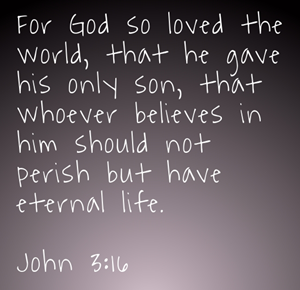 Jesus being “His only Son,” as if it was impossible for God to create more children. My humble human parents had five children, including three sons. I thought it odd that God was limited to one son.
…Wouldn’t it be better to send down more emissaries, spreading the Word more effectively? That question — posed as innocently as I could (using an eleven-year-old’s vocabulary — as I was eleven at that time) went over like a lead balloon in Bible school. One thing was made crystal clear:
Asking too many probing questions about God and religion was frowned upon!
…And this, by itself, was yet another sticking point: If God made us, certainly He knew we’d ask awkward questions. I mean, if none of the grown-ups could answer them, and if God Himself would not take me off to the side and clear things up, what chance would a lowly kid have at making sense of it all?
 …Would that be enough to damn me to hell forever?
I remember posing this question (in different words) to a grown-up who responded with, “Don’t worry, God knows what’s in your heart.” That statement comforted me then as it does now, but for a moment I couldn’t help thinking, “What? Are we just making this stuff up as we go?!”
(Much later I realized the answer to that question, in some sense, is likely true* — even though later I found several Bible verses that confirmed the grown-up’s comforting reassurance.)
Regardless, by about this time I had mostly resigned myself to the attitude of, “Better safe than sorry.” Better to stick with church because you never knew. Also, I didn’t want to be an outcast and besides — I thought these questions might answer themselves in time.
*Most mainstream Christians put their own spin on the literal interpretations of the Old Testament, and for good reason: Otherwise, you’re forced to accept that God has a bad temper (to put it mildly). A different God emerges in the New Testament. So even though we’re told the Bible is the “perfect” Word of God, there’s confusion and controversy.
As a result, there are valiant and ongoing efforts at deciphering, clarifying, and otherwise paraphrasing the Bible (although not to the 100% satisfaction of the religious and secular alike), to reconcile the Bible with the benevolent, just, and loving God Whom we’re told exists.
As a young adult, my last day at a certain Southern Baptist church was when the preacher droned on about exactly what hell would feel like. He bellowed that your “pain sensors” — your nerves — would not crisp up and die; they would continually regenerate so that you would experience the pain of burning each and every second, forever and ever.
I’ve always admired the Southern Baptists for subscribing to Biblical literalism. Their belief system does not allow for second-guessing or otherwise ‘re-interpreting’ the Bible. I don’t agree with them, I think they’re kinda nuts, but it sure makes things simpler, doesn’t it?
“Biblical inerrancy is important not only for what it affirms, but for the theological ambiguities it avoids.” – from the newspaper, “Religion,” The Lakeland Ledger, June 1991
IV. The Day I Found God
I’ll never forget the day at summer Bible School(!) when we were shown a “Moody Science” film. It changed my life, that film. At eleven, I had never seen anything so fascinating before and rarely since. I was already keenly interested in science, but now I finally understood why people worshiped God!
The theme of the film was astrophysics, although I don’t remember it being titled that. I sat there absolutely spellbound, as we learned about Einstein’s general theory of relativity and time travel. We were told that astronauts in a spacecraft departing Earth for Alpha Centauri, traveling near the speed of light and returning, would age only a little compared to everyone back on Earth.
That film ignited a fire of unquenchable enthusiasm for science — especially astrophysics — that still burns in me today. To me, this was the most memorable thing that ever happened at that church. We learned about the age and size of the universe. Now this was a God I could celebrate!
Looking back, I realize the church staff was probably unaware of some inconsistencies the film exposed between science and religion. I was a questioning and enthusiastic young man, and if I didn’t have questions about religion before, I sure had them now.
…Yet the more I learned about science, the more I believed in God but the less I believed in religion — or at least in the literal version of most of the Biblical stories. If I was going to continue in my newfound faith, I’d have to view the Bible in a ‘big picture’ sort of way.
It was clear: To reconcile the Bible with science, one must not take everything in the Bible literally, while taking some things on faith.
Although I didn’t think of it that way at the time, I was moving further and further from Christian Fundamentalism or Biblical Literalism. But would I move all the way to a Spinoza-like view of the Universe — like my science hero, Albert Einstein?
Albert Einstein

Albert Einstein’s religious views have been studied extensively. Why? Because people consider him to be an authority figure, and this carries more weight with those who understand little of science.*
And happily, besides being a brilliant scientist, Einstein also turned out to be an eloquent speaker and writer. This was especially true when he was inspired to speak or write about his passion — the magnificence of the Universe.
*Getting your science or especially religious info from authority figures has a bad track record. That’s because authorities are not only often wrong, but many use their authority status to further their own agenda. Yet most people take on face value as true anything and everything they say – because they’re “authorities.” Albert Einstein is, however, a notable exception: He was clearly one of the most brilliant scientists the world has ever known, and certainly appeared trustworthy as well. So, although an “authority figure,” we can at least trust him on matters of science (specifically, physics).
The below quote by Einstein sounds like it came from Henry D. Thoreau or Ralph W. Emerson — not a theoretical physicist. It is from an interview he did for a book published in 1930 by George S. Vierect. The book is titled, “Glimpses Of The Great.”
…Viereck asked Einstein if he considered himself a Pantheist.
Einstein responded:
“Your question is the most difficult in the world. It is not a question I can answer simply with yes or no. I am not an Atheist. I do not know if I can define myself as a Pantheist. The problem involved is too vast for our limited minds.
May I not reply with a parable? The human mind, no matter how highly trained, cannot grasp the universe. We are in the position of a little child, entering a huge library whose walls are covered to the ceiling with books in many different tongues.
The child knows that someone must have written those books. It does not know who or how. It does not understand the languages in which they are written. The child notes a definite plan in the arrangement of the books, a mysterious order, which it does not comprehend, but only dimly suspects.
That, it seems to me, is the attitude of the human mind, even the greatest and most cultured, toward God. We see a universe marvelously arranged, obeying certain laws, but we understand the laws only dimly. Our limited minds cannot grasp the mysterious force that sways the constellations.
I am fascinated by Spinoza’s Pantheism. I admire even more his contributions to modern thought. Spinoza is the greatest of modern philosophers, because he is the first philosopher who deals with the soul and the body as one, not as two separate things.” – Albert Einstein
Although Einstein made it clear he didn’t believe in a personal God, he continuously strived to articulate his feeling of awe and wonder at a God-created Universe. He referred to his belief system as “cosmic religion,” and in 1954 wrote an article on the subject. His article later became his book, “Ideas and Opinions.”
Einstein’s belief system recognized a ”miraculous order which manifests itself in all of nature as well as in the world of ideas.” He rejected any conflict between science and religion. In fact, he held that “cosmic religion” was necessary for science.
He told William Hermanns in an interview:
“God is a mystery, but a comprehensible mystery. I have nothing but awe when I observe the laws of nature. There are not laws without a lawgiver, but how does this lawgiver look? Certainly not like a man magnified.”
…He added with a smile,
“…Some centuries ago I would have been burned or hanged. Nonetheless, I would have been in good company.” – Albert Einstein
A “Kitchen Pass” Into Heaven?!
Despite my questioning nature, I noticed that people at church always seemed so friendly and — even better — happier than people gathered together for other purposes. It just felt like something inherently good.
Through the years I continued going to church but worried if I was the only one with nagging questions; I felt then and even now like an impostor when I set foot in a church.
The only thing that compensates for this feeling is that comforting phrase, “God knows what’s in your heart.”*
…Now I realize why that phrase is so appealing:
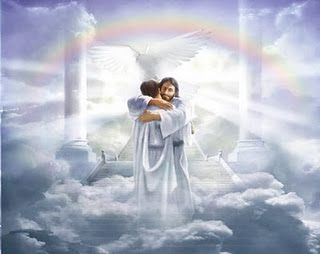 Because, if true, it means there’s a chance I could get into heaven for just being me. A ‘kitchen pass’ of sorts.
If that sounds heretical or irreverent to you, then I hope God (if a ‘personal God’ exists) turns out to be a kinder judge than yourself!
*Proverbs 15:11, Jeremiah 20:12, Matthew 12:25, Mark 2:8, Luke 6:8, Luke 16:15, Acts 15:8
Comfortable Not Knowing
I continued searching for convincing evidence, but in the meantime I was willing to acknowledge my indecisiveness. I was comfortable enough not knowing and — perhaps more importantly — realized I could never truly know.*
*For more on this, see the article, “Can Science and Religion Be Reconciled?”
At the same time, I found it inconceivable that a loving, just God would condemn me to hell for eternity for having questions — no matter if I died an old man with my uncertainty or not. After all, He created me and my world using decipherable laws of physics…
There would be nothing intelligent about an Intelligent Designer that expected me to ignore the very science He used to create me and my world.
“There is no shame in not knowing. The problem arises when irrational thought and attendant behavior fill the vacuum left by ignorance.” – Neil deGrasse Tyson
…Such a god would be more like the wizard portrayed in the classic film, Wizard of Oz; an “ignore the man behind the curtain” sort of prevaricating god.
Our “Loving Father”
God is referred to as our “loving Father.” I thought of my own father, who was stern but loving. If given the power, my own father surely wouldn’t condemn me to an eternity of torture for not believing he was my real dad, not to mention any disobediences I would be guilty of along the way — including murder.
…Punished perhaps. But punishment to fit the crime. I couldn’t imagine God being different. Infinite punishment — the worst kind of torture — for a mere speck in time of sin is just not consistent with a loving, just God. I grew to think of satan and hell as a scare tactic, with as much believability and basis in reality as ancient Greek mythology.*
*I’m in the camp of folks who believe the Bible rife with symbolism; many stories being allegorical with metaphors used to help explanations. As such, I disbelieve the literal versions of satan, heaven, hell, and Adam & Eve, to name a few. But that’s the great thing about belief: In the absence of proof, we are all free to choose what to believe — in the same way that we choose to love. For (to use a variation of a popular aphorism) while we are not entitled to our own facts, we are all entitled to our own opinions and beliefs. (See “Can Science and Religion Be Reconciled?”)
It is plainly nonsensical to conceive of an omnipotent and omniscient God of the Universe feeling so threatened by my questions that He would be compelled to condemn me to an eternity in Hell for not believing everything on faith in a compilation of books written two thousand years ago which has numerous interpretations.
…A compilation in which even Biblical scholars cannot agree, resulting in religion with multiple branches and denominations.
My ‘God-made’ brain will just not accommodate a human-like vengeful and emotional God, anymore than it will accommodate a devil, hell, genies, or unicorns.
On this point, I have to agree with Einstein:
“I cannot imagine a God who rewards and punishes the objects of His creation, whose purposes are modeled after our own — a God, in short, who is but a reflection of human frailty.”
– Albert Einstein
Arrogant Confidence from Faith or Unprovable Science?!
It’s interesting some ‘militant’ atheists and devout theists sound the same:
Incredibly, both groups profess to know with certainty the existence or non-existence of an Intelligent Designer and/or Biblical God. To me, this certainty is misplaced. It’s also nuts that people will fight to the death over finer details of religious belief — even though both sides often believe in the same deity — something for which there is no universally accepted evidence either way.*
*At this point I think it prudent to make a distinction between faith and reality: Faith could be described as “belief not based on proof,” whereas reality is associated with things we know are true. For example, you would never step in front of a moving train because you know it will kill you; you don’t merely have faith it will kill you…
You might, however, commit sins throughout your life, even though the potential penalty for this (forgiveness notwithstanding) is arguably far worse than getting instantly killed.
Faith offers the necessary ‘wiggle room’ between belief and reality.
“Uncertainty is an uncomfortable position, but certainty is an absurd position” – Voltaire
Probably the one sentence that best sums up my hesitation to commit full belief in theism or atheism was when I looked up the definition of “belief” as a kid (shown again here). After reading the dictionary’s definition I thought, “How could I possibly have confidence in the truth of something that was impossible to know is true?!”
“I can live with doubt and uncertainty and not knowing. I think it’s much more interesting to live not knowing than to have answers which might be wrong.” – Richard Feynman
“It’s not what you don’t know that kills you, it’s what you know for sure that ain’t true.” – Mark Twain
There’s someone who inadvertently cobbled together a viewpoint that closely approximates the way many people feel about science and religion…
If you have a few minutes to watch the following video, I ‘believe’ you won’t be disappointed. I’d already read a couple of neuroscientist David Eagleman’s books and knew what an intelligent person and smart communicator he is. His talk on “Possibilianism” is as entertaining as it is enlightening…
I’ll finish this article with the following quote (also shown elsewhere in the book) by physicist and string theorist Brian Greene. His eloquent quote probably best sums up my attitude about science and religion:
“The universe is incredibly wondrous, incredibly beautiful, and it fills me with a sense that there is some underlying explanation that we have yet to fully understand. If someone wants to place the word God on those collections of words, it’s OK with me.”
– Brian Greene